Animal Registry Software That Actually Fits
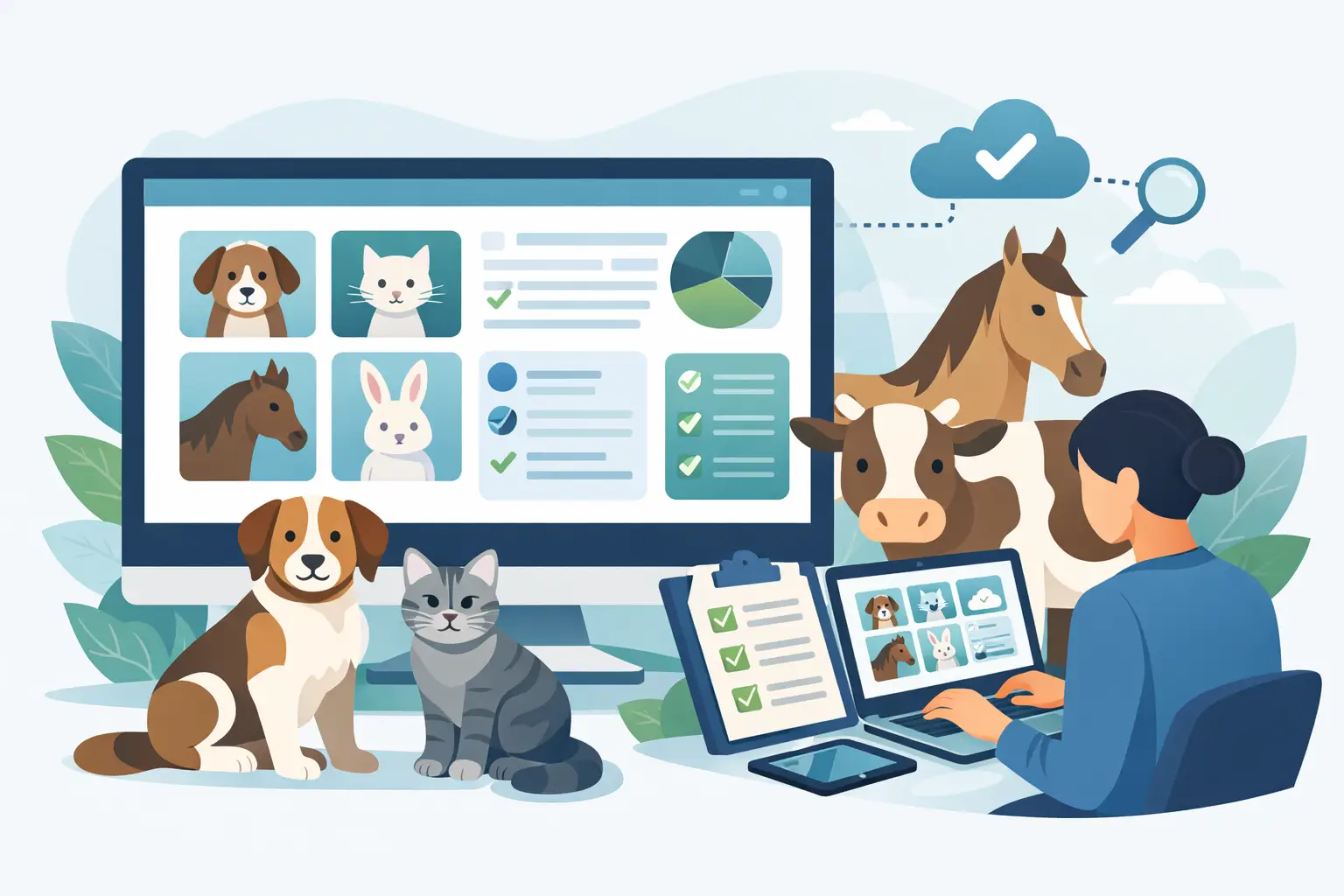
If your registry still runs on emailed PDFs, manual pedigree lookups, and somebody's heroic spreadsheet habit, you do not have a software system. You have a bottleneck. Good animal registry software fixes that, but only if it is built around how breeders, clubs, and registry admins actually work.
That sounds obvious until you look at what most organizations are using. Generic database tools do not understand litter registration, permanent records, ownership transfers, titles, DNA verification, or breeder-facing applications with missing data. General-purpose forms can collect information, but they do not manage lineage logic or maintain clean records over time. And basic kennel software often handles animals inside one program, not the rules and public trust that come with running a registry.
What animal registry software is supposed to do
At a minimum, animal registry software should maintain accurate animal records, track lineage, process applications, and give breeders and administrators confidence that the data is right. That is the baseline. If the system stops there, staff still end up doing too much by hand.
A serious registry platform also needs to support the operational layer around the records. That usually means breeder accounts, document collection, fee handling, ownership history, status changes, administrative review, and some form of public verification. For many organizations, it also means handling exceptions without breaking the whole system. A duplicate animal name, an incomplete sire record, a pending DNA result, or a transfer dispute cannot send the admin team back to inbox triage.
This is where a lot of software misses the mark. It stores information, but it does not guide the workflow. Registries do not just need data entry screens. They need rules, approvals, audit trails, and a system that reflects the way records move through the organization.
Why generic tools break down fast
Most breeder organizations do not start with custom software. They start with what is available. A website form collects litter applications. A payment processor handles fees. Somebody keeps the pedigree records in a spreadsheet or desktop database. Certificates are generated manually. Transfers come in by email. Questions pile up in the inbox.
That patchwork can limp along for a while, especially if volume is low and one experienced person knows where everything lives. But growth exposes every weak point. Data gets entered twice. Record mistakes become harder to unwind. Breeders wait too long for approvals. Buyers cannot verify information easily. Admin work starts depending on memory instead of system logic.
There is also a trust issue. A registry is not just a filing cabinet. It is a credibility layer for breeders, buyers, and the breed community. If records are inconsistent, delayed, or difficult to verify, the registry's reputation takes the hit.
The features that matter most
The right feature set depends on whether you are a breed club, an independent registry, or a breeder-run operation with internal recordkeeping needs. Still, a few capabilities matter in almost every case.
Pedigree and lineage logic
This is the core. The software should not only store parentage, but validate it where possible, flag conflicts, and let administrators handle edge cases without corrupting records. Multigenerational pedigree display matters, but so does the less glamorous work behind it - duplicate prevention, parent linking, date consistency, and historical accuracy.
Registration workflows, not just forms
Submitting an application is not the same as processing one. Good animal registry software should move an application from intake to review to approval with clear statuses, missing-item checks, and admin notes. If every exception requires a custom workaround, the platform is too brittle.
Ownership and transfer records
Ownership changes are where bad systems get messy fast. You need a clean history, effective dates, supporting documentation, and role-based permissions for who can edit what. If a buyer, breeder, and admin all have different versions of the truth, the software is failing.
Breeder and member accounts
Registries work better when breeders can log in, view records, submit applications, track status, and update limited account information without emailing staff for every small task. Self-service does not mean giving away control. It means reducing repetitive admin work while preserving review authority where it matters.
Public verification
Some registries need searchable public records, while others need more limited verification tools. Either way, there is usually a need to confirm that an animal, litter, or certificate is legitimate. That matters for buyer confidence and for the standing of the breeders using the registry correctly.
The hard part is the rules
Need help with your breeder website or software?
I build websites, records apps, and breeder tools for programs like yours. Tell me what you need and I'll help figure out the right next step.
Software projects like this often get framed around screens and features, but the real work is in the rules. Can a litter be registered if one parent is pending? What happens when an ownership transfer is submitted before the animal is permanently registered? When is a name locked? What records become public, and when?
Those details are not side issues. They are the product. If your developer does not understand breeder operations, you spend half the project explaining basic concepts and the other half cleaning up a system that technically works but does not fit real usage.
That is why off-the-shelf tools so often create friction in breeder spaces. They are built for generic memberships, generic inventory, or generic customer records. Registries are none of those things. They involve lineage, verification, policy enforcement, and a very specific kind of administrative judgment.
Custom versus off-the-shelf animal registry software
There is no universal right answer here. If your registry is small, your rules are simple, and your process is stable, an adapted existing platform might be enough for now. That can be a reasonable first step if the goal is to stop the most obvious operational bleeding.
But there is a ceiling. Once your registry has unique approval logic, multiple record types, breeder accounts, public verification needs, and a real administrative load, generic systems start costing more in workarounds than they save in upfront budget.
Custom animal registry software makes the most sense when the process itself is your differentiator, or when your staff is spending too much time compensating for disconnected tools. It is also the better path when accuracy, auditability, and trust are central to your brand. A registry cannot afford fuzzy records just because the software was cheaper.
That does not mean custom has to mean massive. The best projects are usually phased. Start with record structure and application flow. Then add breeder dashboards, transfer workflows, certificate generation, reporting, or public lookup based on what is creating the most friction.
What implementation really looks like
A lot of registry organizations think the first step is choosing features. It usually is not. The first step is mapping the current workflow honestly.
Where does an application enter the system? Who reviews it? What can be auto-validated? What must be manually approved? Where do errors happen most often? Which records need to be permanent, and which can be edited? If you skip that work, you end up digitizing confusion.
The build itself should reflect real operational priorities. Clean record architecture matters more than flashy admin dashboards. Permission structure matters more than visual polish. Search, filtering, and record history matter more than a long list of nice-to-have settings nobody will use.
This is also where breeder-native experience matters. A developer who already understands pedigrees, litters, transfers, buyer trust, and registry logic will ask better questions earlier. That shortens the path to a system that feels usable on day one instead of technically impressive but operationally wrong. Built By Dusty works in that lane for a reason.
Signs your registry has outgrown its current setup
If staff members are manually checking parent records before every approval, you have a system problem. If breeders repeatedly email for status updates, you have a visibility problem. If ownership history lives across forms, PDFs, and inbox threads, you have a record integrity problem.
The same goes for certificate generation that depends on copy-paste, public verification that requires contacting an admin, or reporting that takes hours because data is scattered. None of that is a normal cost of running a registry. It is just what people get used to when the software does not match the work.
There is a difference between complexity that comes with the breeding world and chaos caused by weak systems. Good software will not remove every edge case. It should make those edge cases manageable without dragging down every routine task.
Choosing software that fits the real job
The best animal registry software is not the one with the longest feature list. It is the one that handles your actual rules, your actual records, and your actual admin workload without forcing your team into constant workarounds.
That means asking harder questions before you buy or build anything. Can the system reflect your registration policies accurately? Can it protect record integrity over time? Can breeders use it without creating more support work? Can admins review exceptions cleanly? Can buyers or members verify what they need to verify?
If the answer depends on extra spreadsheets, inbox monitoring, or tribal knowledge from one longtime staff member, the setup is not finished.
A registry should feel credible from both sides. Breeders should trust the process. Admins should trust the data. Buyers should trust the records they see. When the software supports that instead of getting in the way, the registry stops acting like a patchwork office process and starts functioning like real infrastructure.
If you are evaluating your next move, start with the mess that slows your team down every week. That is usually where the right system should begin.
The Breeder Newsletter
Get articles like this in your inbox. No spam, no fluff, just breeder business.
No spam. Unsubscribe anytime.