Animal Breeding Records Software That Fits
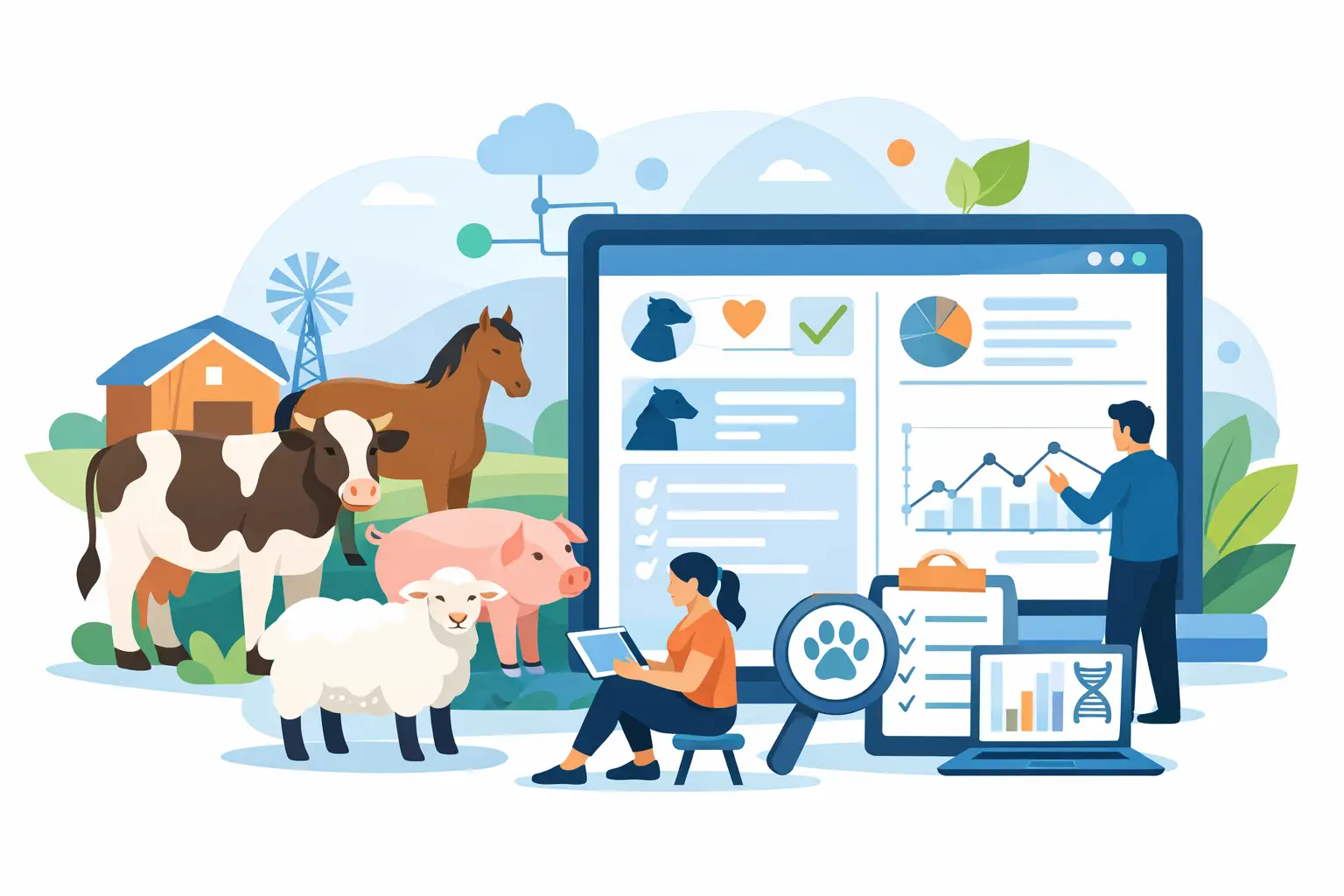
If your breeding program still runs on a mix of notebooks, text threads, spreadsheets, emailed contracts, and whatever you can find in your camera roll, you do not have a records system. You have a pile of loose parts. Animal breeding records software is supposed to fix that, but most breeders already know the catch: a lot of software looks organized in a demo and falls apart once you try to run real breeding operations through it.
That gap matters more than people outside this industry realize. Breeders are not just storing names and dates. You are tracking pedigrees, pairings, heat cycles, health testing, registrations, litter outcomes, puppy or offspring allocations, buyer conversations, deposits, contracts, and follow-up after placement. If the system cannot handle how those pieces connect, it creates more work instead of removing it.
What animal breeding records software should actually do
At a basic level, animal breeding records software should give you one place to manage animal data over time. That includes identity records, lineage, reproductive history, medical notes, documents, and ownership details. But for serious breeders, basic storage is not enough. The real value is in how the software connects one record to the next.
A female should connect to her breedings, pregnancy notes, litter records, retained offspring, and future pairings. A sire should connect to his breedings, offspring, performance data, and health information. A litter should connect to individual animals, buyer activity, deposits, contracts, and registration paperwork. If those relationships are missing, you are still doing the actual work in your head.
This is where generic tools usually break down. A spreadsheet can list dogs, dates, and test results. It cannot easily reflect lineage logic, breeding outcomes, and buyer workflow without turning into a maintenance project. A general CRM might track leads, but it does not understand that one inquiry may end in a waitlist spot for a specific litter from a specific pairing with a different timeline than your current available animals. Breeders do not need more software categories. They need fewer gaps.
Why generic software frustrates breeders
Most off-the-shelf systems are built for either inventory, appointments, or broad pet-industry use. Breeding programs are none of those things. Your operation has animals, yes, but it also has timing, compliance, buyer screening, long decision cycles, and records that need to stay accurate across generations.
That is why breeders end up duct-taping systems together. One tool handles inquiries. Another handles deposits. A cloud folder stores contracts. Health records live somewhere else. Pedigree data might be in a separate program entirely. Then somebody asks for a registration detail, a color history, a coefficient question, or proof of testing on related animals, and now you are opening five tabs and searching old emails.
The issue is not that breeders are disorganized. The issue is that the software was never built around breeder operations. There is a difference.
The records that matter most
Good animal breeding records software starts with animal profiles, but that is only the foundation. For most established programs, the pressure points show up in six areas: pedigree tracking, reproductive timelines, health and genetic records, litter management, buyer workflow, and document control.
Pedigree tracking needs to be more than a text field for parents. You should be able to follow lineage clearly and trust that parent-offspring relationships stay intact as your program grows. If you work in dogs, that often means balancing registration details, titles, health testing, and color or trait information in the same view. Reptile breeders may care more about gene pairings, trait inheritance, and clutch outcomes. The details differ by species, but the operational need is the same: connected records, not isolated notes.
Reproductive tracking is another place where simple tools start to fail. You need to record cycles, pairings, breeding dates, ultrasounds or confirmations, expected due dates, litter or clutch notes, losses, and whelping or hatching outcomes. On paper, this sounds manageable. In practice, it gets messy fast when multiple animals are active at once.
Health records are often the deciding factor between software that is merely convenient and software that is actually useful. If you cannot tie test results, vaccinations, diagnoses, treatments, and veterinary notes back to specific animals and their offspring, you lose historical value. Over time, that weakens buyer communication and internal decision-making.
Animal breeding records software and buyer trust
Need help with your breeder website or software?
I build websites, records apps, and breeder tools for programs like yours. Tell me what you need and I'll help figure out the right next step.
Breeders sometimes think of records software as a back-office tool. It is not. It directly affects how professional you look to buyers.
When a buyer asks about parents, health testing, availability, expected timing, or contract terms, fast and accurate answers build confidence. Slow, inconsistent answers do the opposite. The same is true for waitlist management. If somebody placed a deposit six months ago and you cannot quickly verify what litter they are tied to, what preferences they gave, and what communication they have received, that is not just an admin problem. That is a trust problem.
The strongest systems connect public-facing sales workflow to private recordkeeping. That means an inquiry can become an approved buyer, then a deposit, then a litter assignment, then a signed contract, then a placed animal record without you retyping the same information at every stage. That handoff is where a lot of breeder businesses either look polished or look chaotic.
Custom vs off-the-shelf animal breeding records software
This is where the answer depends on your program.
If you are small, have a straightforward workflow, and only need a cleaner way to store records, an off-the-shelf system may be enough for now. It can absolutely be better than scattered spreadsheets and inbox hunting. Not every breeder needs a custom platform on day one.
But if your program has multiple active litters or clutches, a substantial waitlist, repeat buyers, staff or family members handling communication, breed club or registry involvement, or a strong need to connect website activity with internal records, generic software starts showing its limits. You end up adapting your business to the tool instead of the tool supporting the business.
That is usually the point where custom software becomes worth serious consideration. Not because custom sounds fancy, but because breeding operations have very specific logic. Pairings connect to timelines. Timelines connect to availability. Availability connects to buyer communication. Buyer communication connects to deposits and placement records. If those pieces live in separate systems, you are doing constant manual cleanup.
Built by people who actually understand breeder workflows, a custom system can reflect how your program already runs instead of forcing you into a borrowed model from another industry.
How to tell if your current system is costing you time
Most breeders do not notice the cost in one dramatic moment. They notice it in repetition.
You answer the same buyer questions over and over because information is not centralized. You copy details from one form to another. You chase vaccination dates in one place and contract files in another. You forget where a certain health record was saved. You spend too much time explaining internal context to a website developer or software provider who does not know what a waitlist, retained puppy, breeding right, or pedigree-based inquiry even means.
That friction adds up. It affects response time, buyer confidence, and your ability to make decisions from your own data. It also makes growth harder. A system that barely works for six animals and one litter a year usually breaks when your operation becomes more established.
What to look for before you invest
The right software is not the one with the longest feature list. It is the one that matches your actual workflow.
Look at how animal records are structured and whether relationships between animals, litters, and buyers are truly connected. Look at whether your documents, communications, deposits, and public-facing availability can tie back to those records. Ask how easy it is to pull up a full history on one animal or one litter without hunting across multiple modules.
You should also look hard at flexibility. Breeders work differently by species, by scale, and by program style. Dog breeders, reptile breeders, and registries do not all need the same interface. If the software cannot adapt, it will eventually become another workaround.
Just as important, pay attention to who built it. If the people behind the product do not understand breeder operations, you will spend half the project translating your business. That is usually where generic development shops lose breeders. They can build software. They just do not know your world.
The best animal breeding records software does not feel like another app you have to manage. It feels like your program finally has a system that can keep up with it. And once that happens, you spend less time hunting for information and more time making better breeding decisions.
The Breeder Newsletter
Get articles like this in your inbox. No spam, no fluff, just breeder business.
No spam. Unsubscribe anytime.