Crested Gecko Pedigree Tracking: Why Breeders Outgrow Spreadsheets
Crested gecko pedigrees are not dog pedigrees, and the breeders who treat them like they are end up rebuilding a spreadsheet from scratch every two years.
The dog pedigree model is the one most breeder software is built around. A dog has a name, a registered ID, two parents, four grandparents, eight great-grandparents, and a closed registry that keeps it all consistent. Coat color is mostly cosmetic. Health testing is the genetic data that matters. Breeding decisions are about hip scores, COIs, and conformation.
A crested gecko pedigree is a different animal. The phenotype matters as much as the lineage, hets are the entire point of the back-end of the program, and the tools that work for dogs collapse the moment you try to track a 50-clutch season with two-thirds het outcomes that need genotype confirmation.
This post is what crested gecko pedigree tracking actually has to do, why a spreadsheet only works at the smallest scale, and what to look for in a tool that does the job. If you are still tracking weights, clutch dates, and pairings in Google Sheets, the broader spreadsheets post covers the general failure modes. This post is gecko-specific.
Who this is for: crested gecko breeders running more than one pair, especially anyone working with morphs that involve hets, polygenic traits, or line breeding outcomes.
Why Gecko Pedigrees Are Different
A gecko pedigree has to track three things at once: lineage, phenotype, and genotype. In dogs, those three usually collapse into one. In geckos, they pull in different directions and any tool that does not handle them separately starts to lie to you.
Lineage. The standard parent-grandparent-great-grandparent tree. This part is the same as any other species. The complication is that crested geckos do not have a closed registry, so the lineage is whatever the breeders involved chose to record and pass forward. Lineage data is only as good as the worst record-keeper in the chain. If your community is moving toward a club-level registry, breed club software handles registration and pedigree verification across multiple breeders on the same platform. Gold Standard Gecko Club runs theirs this way.
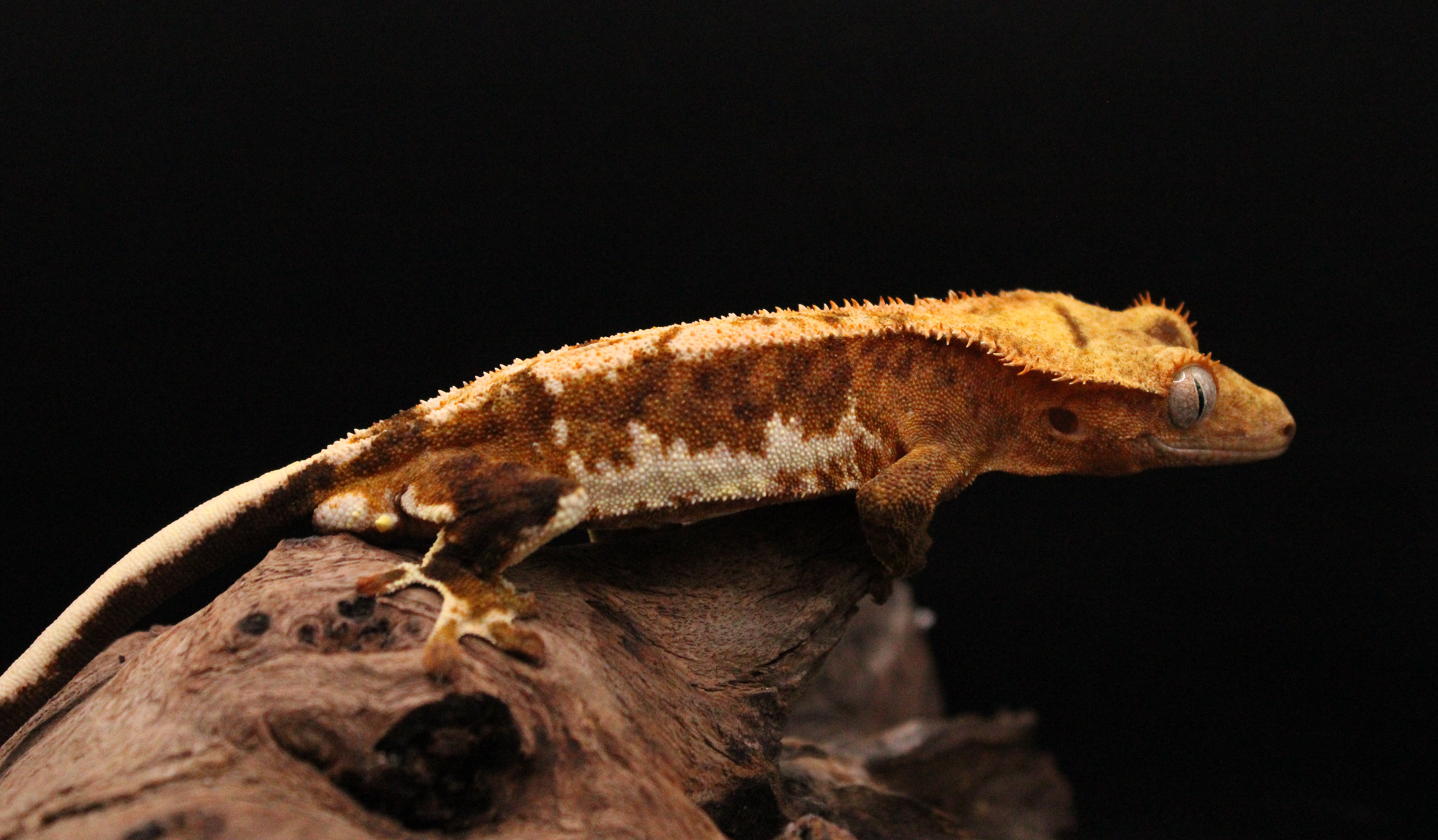
Phenotype. What the animal actually looks like. Base color, pattern, dalmatian spotting, pinstripe expression, structure, eye color. Phenotype is what buyers see in photos. It is also the thing that drives line breeding decisions because most high-value crested gecko traits are polygenic. There is no single Mendelian "harlequin gene." Harlequin is the cumulative expression of a line that has been selected for it for generations.
Genotype. What the animal is carrying, regardless of how it looks. Lily White is co-dominant and shows in heterozygous form. Axanthic is recessive and only shows when paired het-to-het. Cappuccino is dominant with a known super lethal in homozygous form. The genotype is what determines what a pairing can produce, and a tool that only tracks phenotype cannot make breeding predictions.
A spreadsheet can hold all three columns. What it cannot do is connect them across generations or use them to predict outcomes. That is where the model breaks.
Where Spreadsheets Fail for Gecko Breeders
The spreadsheet failure modes are species-specific and they show up earlier in geckos than in any other species I work with.
Het tracking gets ambiguous fast. A gecko produced from an axanthic-het paired to an unknown background is "possible het axanthic" until proven otherwise. A spreadsheet can record "66% het" or "50% het" but it cannot update those probabilities when an offspring of that animal proves out (or fails to prove out) a year later. Probability updates are a graph problem, not a row-and-column problem.
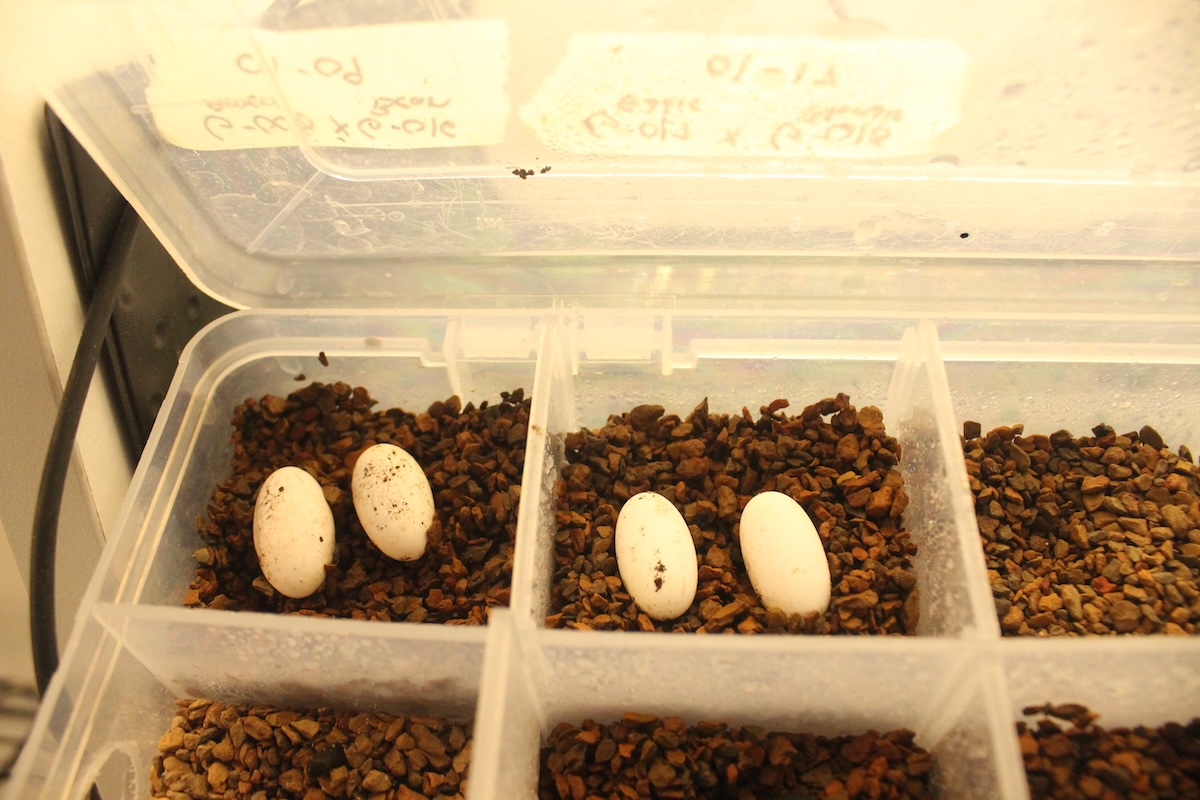
Clutch-level data has no good home. A pair produces multiple clutches per year, each clutch usually two eggs, with a season running from October through July or so. Tracking by clutch rather than by hatchling, with hatch dates and morph distributions per clutch, is structurally different from a single-litter dog model. Spreadsheets either flatten this into per-hatchling rows that lose the clutch context, or per-clutch rows that lose the hatchling detail. Neither is right.
Line breeding outcomes are not visible. Polygenic trait expression (harlequin intensity, dalmatian density, pinstripe expression) only becomes visible when you can see what specific pairings produced over several generations. A spreadsheet shows the pairings. It does not show the trait outcomes back to the producing parents. For breeders working on a line, this is the single piece of data that drives keeper decisions, and it is the piece that is hardest to get out of a sheet.
Morph predictions are manual. Breeders running multiple pairs need to know in advance what a planned pairing can produce. A Lily White x Lily White pairing has a 25% super risk. An axanthic-het x axanthic-het pairing has 25% homozygous expression and 50% het carriers. Pulling these percentages by hand for every planned pairing is the kind of mechanical work that slows down breeding decisions and introduces errors. Tools that have a morph calculator built in (the crested gecko morph calculator on this site is the free version of one) take the math out of it.
Buyer-facing pedigree presentation is impossible. When a buyer asks for the lineage on a holdback, the spreadsheet answer is a screenshot of cells that means nothing to the buyer. Real pedigree certificates require a structured tree that a buyer can read. Generating one by hand for every transaction takes time most breeders do not have.
Photo-to-record matching breaks down. Crested geckos look different at hatch, at three months, at six months, at eighteen months. Tracking the same animal across photo updates, weight points, and morph evaluations means tying photos to the animal's record. In a spreadsheet, photos live in one folder, the records live in another, and the connection is the file name nobody renamed.
What a Real Crested Gecko Pedigree Tracker Has to Do
The minimum specification for a tool that replaces the spreadsheet rather than just adding another tool to maintain in parallel.
Multi-generation lineage with phenotype and genotype tracked separately. Each animal has a record. Each record has separate fields for what it looks like, what it carries, and where it came from. The lineage tree pulls all three forward through the generations.
Probabilistic het tracking that updates with offspring data. When an animal produces offspring, the het probabilities on the parent and the offspring update based on what was produced. A "66% het axanthic" animal that produces an axanthic offspring is now a confirmed het. A "66% het" animal that produces 20 offspring across 3 axanthic-het pairings without ever producing a homozygous offspring drops to "low probability het." The tool tracks this.
Clutch-level tracking with hatchling-level detail. Clutches are the unit of breeding output. Hatchlings are the unit of evaluation and placement. Both have to be first-class records with the right structural relationship.
Morph prediction calculator integrated with the pedigree. Pick two animals from the collection, get the predicted offspring distribution. Save the prediction with the planned pairing. Compare the actual outcome to the prediction when the clutches hatch.
Weight and growth tracking. Hatchling growth curves are how you spot problem animals before they are problem placements. Weights tied to specific dates, comparable to litter siblings and to lineage standards. The collection-level view of "which juveniles are underweight for their hatch date" is the morning check that prevents problems.
Pedigree certificate generation. Generate a printable, buyer-ready pedigree certificate from the lineage data on demand. Branding optional. The free pedigree certificate generator on this site is a starting point. A real tracker has this built into the animal record.
Photo and document attachment. Photos at multiple ages, attached to the animal record. Health records. Veterinary visit notes. Anything you want to be able to retrieve when a buyer asks about the animal three years after placement.
Multi-pair planning view. A view that lets you plan the season's pairings, see what each pairing is predicted to produce, identify holdback candidates, and project the season's output before the first egg is laid.
What Exists Today
The honest evaluation. Most breeder software targets dogs first. Gecko-specific options are limited.
Generic spreadsheets. Free, flexible, and the right answer for a breeder with one or two pairs. The failure modes covered above show up around five pairs and become unmanageable around fifteen.
Notion or Airtable databases. A step up from spreadsheets. Better for relational data, photo embedding, and shared access. Still does not handle morph calculation, probabilistic het tracking, or pedigree generation natively. Custom builds get you partway there with a lot of setup time.
Reptile-specific software. A few options exist. Most are weight-and-feeding-log tools, not pedigree systems. The morph and genetics layer is where they fall short.
ReptiDex. I built this because no good option existed for what I needed. Multi-generation pedigree tracking, het probability handling, clutch and hatchling structure, weight logs, photo attachments, morph calculator integration. Built by a working crested gecko breeder. Free to try.
The dog pedigree post and the existing reptile software pieces on this blog cover the broader category. This post is the gecko-specific case for moving off spreadsheets. If you are tracking five or more pairs and your weight log is overdue and your het record is in three different documents, you have already outgrown the spreadsheet. The question is what you are replacing it with.
Try It
ReptiDex is free to try and built specifically for the case this post describes. If you would rather see what a different shape of tool looks like, the broader category review is in why I stopped using spreadsheets, and the free crested gecko morph calculator handles the prediction math without an account.