What to Ask a Dog Breeder Before You Buy: A Buyer's Guide
Most puppy buyers get one chance to evaluate a breeder before they hand over a deposit, and most of them spend that chance asking the wrong questions.
The questions buyers usually ask are about the puppy. What color is available. When can I pick it up. Do you have a male. Those questions matter, but they are the questions you ask after you have already decided to work with this breeder. The questions that determine whether you should work with this breeder at all are about the program behind the puppy, and most buyers never ask them.
I have been on both sides of this conversation. I have been the breeder fielding inquiries from buyers I knew within thirty seconds were the right fit, and inquiries from buyers I knew were going to be problems. I have also been the buyer evaluating breeders, deciding which programs to message and which ones to close. The difference between a placement that becomes a fifteen-year success story and a placement that becomes a regret is usually decided in those first two conversations.
This post is the questions to ask, what good answers sound like, what kind of answer should make you nervous, and the one question a great breeder will always ask you back.
Who this is for: people considering a puppy purchase who want to evaluate breeders the way breeders evaluate buyers. Also for breeders who want their inquiry pool to ask better questions, because better questions produce better placements.
Why the Right Questions Matter
A puppy is a fifteen-year commitment with a price tag that can run from two thousand to ten thousand dollars depending on the breed. Most people put more research into buying a used car than into evaluating the breeder of an animal that is going to live in their house for the next decade and a half.
The first conversation with a breeder is your maximum leverage moment. You have not paid yet. The breeder is making the case for you to choose them over other breeders. They are inclined to answer your questions because the alternative is losing a sale. After you pay a deposit, the leverage shifts. Once you are committed, the questions get harder to ask without feeling rude, and the answers get easier for a marginal breeder to dodge.
The other reason these questions matter is what they reveal about the breeder, not just about the puppy. A breeder who answers thoroughly and welcomes follow-up is showing you how they will handle problems later. A breeder who gets defensive, vague, or annoyed is showing you the same thing. Either way, you have the information you need before you have committed to anything.
A reputable breeder will not just tolerate these questions. They will appreciate them. Serious buyers ask specific questions because they have done their research, and serious buyers are exactly who responsible breeders want to place puppies with.
Questions About Health and Genetics
These are the most important questions because they determine whether you are buying an animal with a reasonable shot at a healthy life or buying into a fifteen-year health crisis you did not see coming.
What health testing have both parents had, and can I see the results?
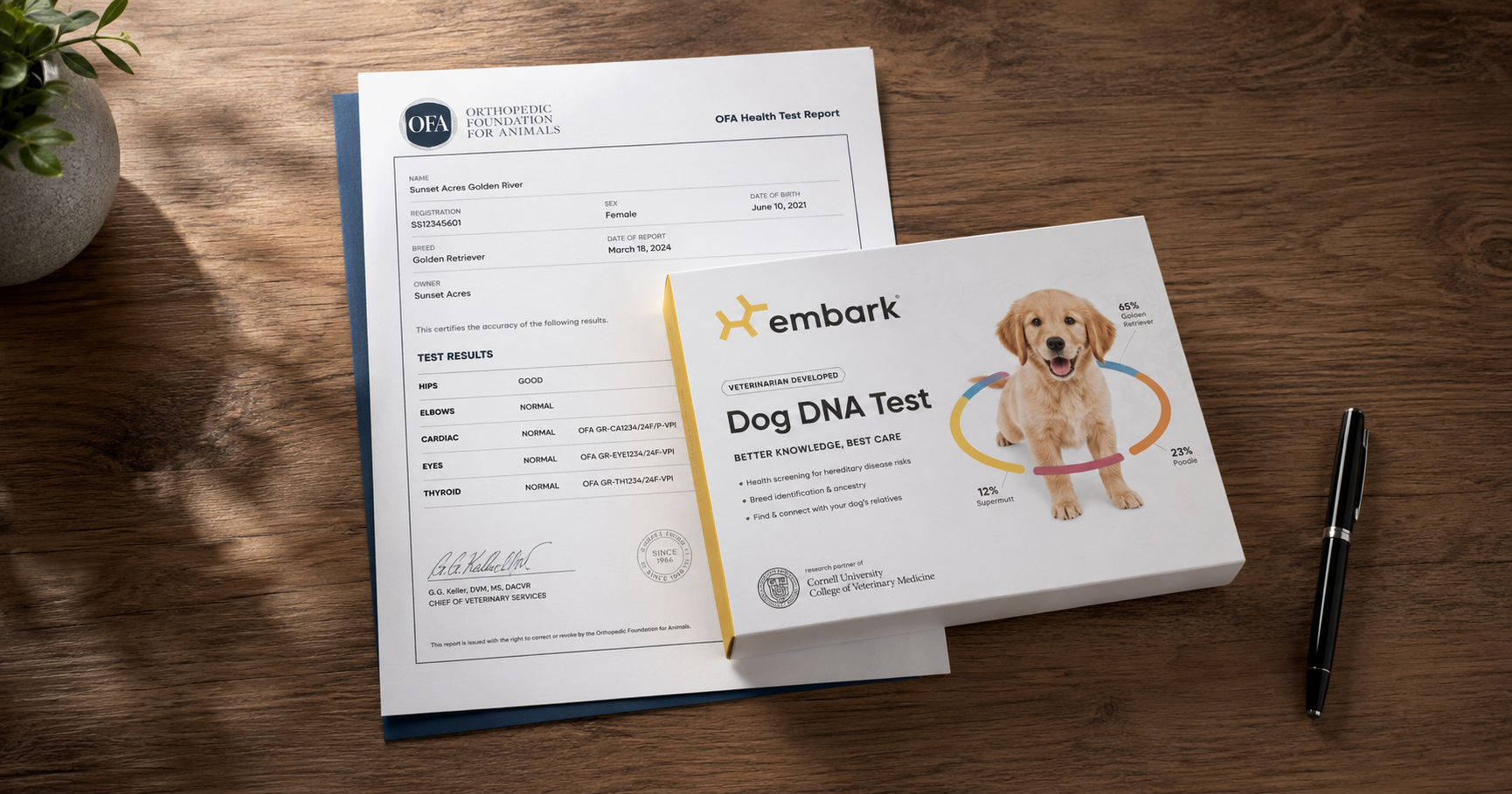
The right answer names specific tests. OFA hips and elbows. Eye certifications (CAER or CERF). DNA panels for breed-specific conditions (Embark, Wisdom Panel, or breed-specific tests). Cardiac evaluations in breeds where it applies. The breeder should be able to point you to public databases (OFA.org, the registry's health database) where you can verify the results yourself, or send you the actual certificates.
The wrong answer is vague. "All our dogs are health tested" without naming specific tests is not an answer. "We have her vet records" is not an answer. The tests for breeding dogs are different from routine vet care, and a breeder who cannot tell you which specific clearances were done either has not done them or does not understand why they matter. Both are problems.
What hereditary conditions are common in this breed, and how does your program address them?
Every breed has known hereditary issues. Hip dysplasia in larger breeds. Cardiac conditions in Cavaliers. Spinal issues in Dachshunds. Breathing problems in brachycephalic breeds. Eye conditions in Collies. A breeder who tells you their breed has no health issues is either uninformed or being dishonest.
The right answer acknowledges the issues directly and explains what the program does to mitigate them. Specific testing protocols. Selecting against affected lines. Choosing pairings that reduce the probability of expressing recessive conditions. Working with a reproductive vet on breed-specific protocols.
What is the genetic diversity in your breeding program?
This is a more advanced question that signals you have done your research. A breeder running closely related dogs across multiple generations (high coefficient of inbreeding, called COI) is producing animals at higher risk for hereditary expression of recessive conditions. A breeder who tracks COI and selects for genetic diversity is doing the harder work that produces longer-lived, healthier dogs.
You will not always get a satisfying answer here. Some breeds have limited gene pools. Some breeders are working to broaden them. The point of asking is to see whether the breeder thinks about genetics as a long-term project or just as the math of the next litter.
Have any of your previous puppies been diagnosed with significant health issues?
This is the question most buyers do not ask because it feels confrontational. It is also the question that most reveals what you are working with.
A reputable breeder will give you an honest answer. Most established programs have produced at least one dog with a serious health issue across enough litters. The breeder who tells you no puppy from any of their litters has ever had any health problem is either lying or has not been breeding long enough to encounter the inevitable. The breeder who acknowledges what has come up, explains what they did about it, and discusses how they have adjusted their program is showing you that they treat their breeding ethically and learn from outcomes.
Questions About the Breeder's Program
These questions are about who you are buying from, not what you are buying.
How long have you been breeding this breed?
There is no single right answer. New breeders working under good mentorship can produce excellent dogs. Established breeders can also become complacent. What you are listening for is genuine engagement with the breed.
Listen for breed-specific knowledge. Familiarity with the breed standard, with notable bloodlines, with the breed's history. A breeder who has been at it for fifteen years and still talks about their breed with depth and curiosity is in a different category from a breeder who started during a pandemic price spike and treats this as a side hustle.
Why this pairing? What are you hoping to produce?
This question separates breeders with intentional programs from breeders who are just producing puppies.
The right answer is specific. "I am breeding her to him because she has excellent structure but slightly soft pasterns, and his line consistently produces strong front structure. The temperaments complement well, both have full health clearances, and the COI on the resulting puppies is under five percent." That is a breeder who thought through the breeding.
The wrong answer is generic. "We thought they would make cute puppies." Or "She came into season and he was available." Or just price-focused. "These will sell well." Those answers tell you that the program is not making selection decisions for the dogs' benefit.
Do you show or compete? Why or why not?
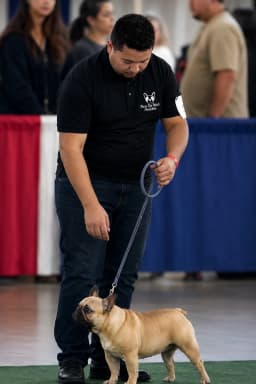
Showing is not the only legitimate way to evaluate breeding stock, but it is one of the few standardized ways. A breeder who shows is having their dogs evaluated against the breed standard by judges who do not know them personally. The dogs that finish championships are dogs that meet objective criteria.
A breeder who does not show needs to have a clear alternative explanation for how they evaluate breeding stock. Performance titles in working or sporting breeds. Sport titles in breeds where conformation is less central. Hunt tests. Health-tested working bloodlines with documented working ability. There are legitimate alternatives, but vagueness here ("we just love our dogs") is not one of them.
What registries do you work with, and what clubs are you affiliated with?
Registry membership and club affiliation are not by themselves quality markers, but they signal whether a breeder is part of a community that holds them accountable. AKC, UKC, breed-specific parent clubs, regional clubs, performance organizations. A breeder who is not part of any community that could critique their breeding practices is choosing isolation, which is rarely a good sign.
Can I have references from past puppy buyers?
A reputable breeder will share contact information for past buyers who have agreed to be references. The references should not all be from the last three months. You want to talk to someone whose puppy is now four years old and who can tell you what the dog has been like to live with.
A breeder who refuses to provide references, or who only provides references from their immediate friends and family, is hiding something or has nothing to point to. Either is a problem.
Questions About the Puppy and the Process
These are the questions about the actual placement.
Can I meet both parents, or at least the dam?
For most placements, you should be able to meet the dam at minimum. The sire is often a stud at another program and may not be physically available. That is fine, but the breeder should be able to show you photos, videos, and full information about him.
Meeting the dam tells you a lot about temperament. Puppies inherit temperament heavily from their mother. A nervous, fearful, or aggressive dam is a flag. A confident, friendly, well-socialized dam is a good sign.
A breeder who refuses to let you meet the parents at all, or who only shows you puppies in a separate room from where they were raised, is hiding something. The most common thing they are hiding is that the puppies were raised in conditions you would not approve of.
Where are the puppies raised, and how are they socialized?
The right answer involves a clean environment, exposure to household sounds and routines, handling by multiple humans starting in the first week, and structured exposure to new experiences as the puppies grow. Many serious breeders use a developmental program (Puppy Culture, Avidog, or similar) or follow specific neonatal stimulation protocols.
The wrong answer is puppies that are raised in a separate building you cannot enter, or in conditions the breeder describes vaguely.
What vaccines and deworming has the puppy had, and what comes home with them?
By eight weeks, a properly raised puppy has had at least one round of core vaccines, has been dewormed multiple times, has had a thorough vet exam, and is microchipped. The breeder should provide written records of all of this.
What comes home with the puppy varies by breeder. Common items include a small bag of the food they have been on, a blanket with the dam's scent, a toy, and a folder with health records, the contract, and registration paperwork. The thoroughness of the go-home package is a signal of how the breeder runs their program.
When do puppies go home, and what does the transition involve?
Eight weeks is the legal minimum in most states and the appropriate go-home age for most breeds. Some toy breeds go home at ten or twelve weeks because they need more time with the dam. A breeder offering a puppy at six weeks is breaking the law in many states and is doing something developmentally harmful regardless.
The right answer also includes guidance for the transition. The breeder should be available to answer questions in the first weeks. They should send the puppy home with the food they have been eating to avoid digestive issues. They should explain crate training, house training, and feeding schedules.
Questions About the Contract and Post-Sale Support
These are the questions about what happens after you take the puppy home.
What does your contract include, and can I see it before I commit?
Every reputable breeder has a written contract. The breeder should be willing to send it to you before you put down a deposit so you can read it without pressure. A breeder who refuses to share the contract until after you have paid is using the deposit as leverage, which is a flag.
Read the contract. Specifically look for the health guarantee terms (what is covered, for how long, what the remedy is if a defect is found), the spay or neuter requirement, the right of first refusal if you cannot keep the dog, and what happens if either party fails to meet the obligations. The breeder should be able to walk you through every clause.
What is your health guarantee?
A real health guarantee covers two things: an immediate vet check window for pre-existing illness, and a longer-term guarantee against severe hereditary defects. The right answer specifies a remedy. Replacement puppy from a future litter. Partial refund equal to vet costs. Full refund less the deposit on return of the animal. Pick one.
The wrong answer is "we will work with you to find a resolution," which is not a guarantee. It is a feeling. Vague language here means there is nothing enforceable when something goes wrong.
What is your return policy if I cannot keep the dog?
A reputable breeder requires the dog to come back to them, at any point in its life, if you cannot keep it. They do not want their puppies ending up in shelters or rescues or being rehomed to strangers on Facebook.
The breeder should explain this clearly and put it in the contract. A breeder who has no return policy, or who tells you "just sell it on Craigslist if you need to," is not a breeder I would buy from regardless of how nice the puppies look.
What support do you offer after the sale?
The right answer is genuine ongoing availability. Updates the first week. A check-in at the first vet visit. Available by text or call when you have questions about training, behavior, food, or health. A community of past buyers if the breeder maintains one. The placement does not end at pickup.
A breeder who treats the sale as the end of the relationship, who you cannot reach with questions a year later, who does not want updates on how the puppy is doing, is a breeder running a transaction. That is not the same as a breeder running a program.
The Question a Great Breeder Asks You
The single biggest signal of a reputable breeder is whether they have questions for you.
A good breeder does not just answer your questions. They ask their own. About your housing situation. Your work schedule. Your experience with the breed. Whether you have other animals. What kind of training you plan to do. Why this breed specifically. How you plan to exercise the dog. What you will do during the puppy stage when the dog is destructive and exhausting.
These questions are not interrogation. They are screening. The breeder is making sure their puppy is going to a home that will give it a good life. They are also protecting themselves from placements that come back as problems.
If a breeder is willing to take your money without asking any of this, you should pause. They are either desperate to move puppies, which is a flag, or they do not care where their puppies end up, which is a bigger flag.
The breeders you want to work with are the ones who almost interview you. The placements they make are intentional. The puppies they produce go to homes they have evaluated. The relationship you build with them as a buyer continues for the life of the dog because they are invested in the outcome, not just the sale.
Be the buyer who welcomes those questions. Answer them honestly. The breeders who ask them are the breeders worth buying from.
Red Flags That Should End the Conversation
Some answers should make you walk away regardless of how nice the puppies look.
No health testing on the parents. "We took them to the vet and they are healthy" is not health testing. The specific clearances for breeding dogs are different from a wellness exam. A breeder who does not know the difference is not running a program you want to support.
Multiple breeds being produced at scale. A breeder doing five or six breeds simultaneously is almost always running a commercial operation rather than a thoughtful program. Single-breed or two-breed programs are the standard for breeders who are deeply invested in the dogs they produce.
Year-round availability of puppies in popular colors. Reputable breeders breed for specific reasons on specific timelines, often producing only one to three litters per year per breeding female. A breeder who always has puppies in the most popular colors of a popular breed is producing volume, not selecting carefully.
You cannot visit the property or meet the parents. Reasonable breeders may have safety protocols, but they will arrange a way for serious buyers to verify that the dogs are real and the conditions are humane. A breeder who absolutely refuses any visit is hiding the conditions.
Pressure to commit immediately. "This puppy will be gone if you do not put a deposit down today" is sales pressure, not a placement. The right buyer for the right puppy has time to think.
Pricing dramatically below or above the market. Significantly below-market pricing usually means significantly below-market quality. Significantly above-market pricing without a clear justification (champion bloodlines, unusual coloration, exceptional health testing protocols) is a red flag of a different kind.
Defensive or annoyed responses to your questions. A reputable breeder welcomes good questions because they want serious buyers. A breeder who acts irritated or evasive when you ask the questions in this post is telling you something important about how they will respond when you have a problem with the puppy six months from now.
The Shareable Summary
Here is the short version, for anyone who needs to send a buyer the questions to ask in one place.
The fifteen questions every buyer should ask:
- What health testing have both parents had, and can I see the results?
- What hereditary conditions are common in this breed, and how does your program address them?
- Have any of your previous puppies been diagnosed with significant health issues?
- How long have you been breeding this breed?
- Why this specific pairing, and what are you hoping to produce?
- Do you show or compete? Why or why not?
- Can I have references from past puppy buyers?
- Can I meet both parents, or at least the dam?
- Where are the puppies raised, and how are they socialized?
- What vaccines, deworming, and health care has the puppy had?
- What comes home with the puppy?
- When does the puppy go home, and what does the transition involve?
- Can I see your contract before I commit?
- What is your health guarantee, and what is the specific remedy if something is wrong?
- What is your return policy if I cannot keep the dog?
The one question to listen for the breeder asking you: do you have questions for me about my home, my experience, or my plans for the puppy?
If they do not ask, walk away.
The right breeder welcomes these questions. The wrong breeder gets defensive about them. Use that as the filter.
Buying a well-bred puppy from a thoughtful breeder is one of the better decisions you can make as a dog person. The animal in front of you is the product of years of selection, health testing, careful pairing, and genuine investment in the breed. The price reflects that work. So does the relationship you build with the breeder over the dog's life.
The buyers who do this well end up with healthier, better-tempered dogs and a breeder who answers their texts at 11pm when their fourteen-year-old companion is in his last week. That is the placement worth waiting for. The questions in this post are how you find it.
For more on what serious breeders do that signals quality before you ever have the conversation, what buyers look at before they message you and what makes buyers trust a program cover the same ground from the breeder's side. If you are evaluating whether a breeder is reputable in a more general sense, how to spot a reputable breeder is the deeper version of that question.
If you are a breeder reading this and thinking about how your inquiry process holds up against this list, that is the right reaction. The breeders whose programs answer all of these questions clearly and confidently are the ones building the strongest reputations and the most loyal buyer communities. If your website or operational stack is not yet set up to make this easy, tell me about your program and I will help figure out where to start.