Reptile Breeder Software That Fits Real Work
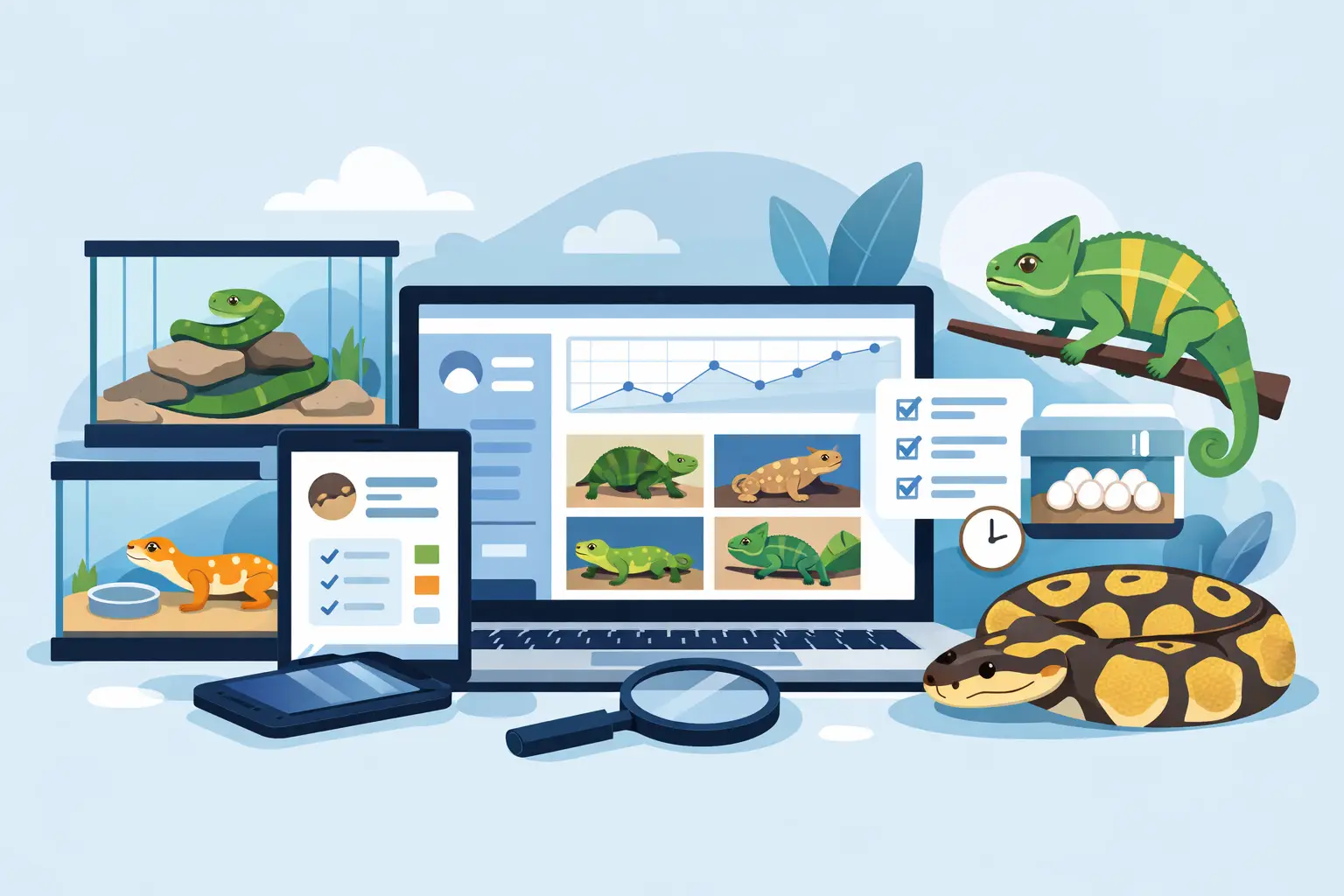
If your reptile business still runs on a mix of notes apps, spreadsheets, DMs, and memory, you already know where the friction shows up. Animals get listed in one place, buyer conversations happen somewhere else, deposits live in a payment app, and pairing history sits in a folder you only trust when you double-check it. That is exactly where reptile breeder software stops being a nice idea and starts being operationally necessary.
The problem is not that breeders lack tools. The problem is that most tools were not built around breeder workflows in the first place. Generic CRM platforms do not understand clutch records. Website forms do not understand holdbacks, hatch dates, lineage, or phased availability. Kennel software often feels like a close-enough substitute until you try to manage reptile-specific records at scale and realize you are doing constant workarounds.
What reptile breeder software should actually handle
Good software for a reptile breeding program should match the way your business already works when it is running well. It should not ask you to flatten your operation into a generic contact database or a patched-together online store.
At a minimum, the system should connect animal records, buyer communication, and sales activity. That means each animal is more than a listing with a photo and a price. It should carry lineage, genetics, hatch information, feeding or weight notes if relevant to your process, status changes, and a clean history of who asked about it, who placed a deposit, and whether it sold or was retained.
This matters even more once your volume increases. The operational gap between managing ten available animals and managing fifty is not linear. It compounds. You start needing cleaner filters, faster search, better status control, and a way to stop answering the same availability questions over and over.
The biggest mistake breeders make with software
Most breeders do not buy the wrong software because they chose carelessly. They buy the wrong software because they solve one pain point at a time.
First they add a form to reduce inbox traffic. Then they use a spreadsheet for pairings. Then a separate app for invoices or deposits. Then maybe a website plugin for available animals. Every piece looks reasonable on its own. The mess shows up in the handoff between systems.
That disconnect costs time, but it also costs trust. A buyer submits an inquiry and waits because the message got buried. An animal marked available already has a deposit because the website was not updated. A repeat customer asks about lineage and you know you have the answer, but not fast enough. None of that means the breeding side is weak. It means the system around it is fragmented.
Reptile breeder software is really an operations system
This is the part generic tech companies usually miss. Breeder software is not just recordkeeping software.
For reptile breeders, the best system usually sits across three layers at once. It manages internal records, supports public-facing sales, and gives you a controlled way to handle buyer communication. If one of those layers is missing, you end up rebuilding it somewhere else.
A simple example is deposits. A generic payment solution can collect money. That does not mean it understands what the payment means in your business. Is the animal now reserved? For how long? Does the buyer need to complete a questionnaire? Did that deposit come from a waitlist contact or a public inquiry? Should the animal disappear from your available page automatically, or stay visible as on hold? Those are breeder workflow questions, not payment processor questions.
The same is true for animal records. A spreadsheet can store data, but it does not guide decisions. When software is built properly for breeders, records become useful in motion. You can track pairing outcomes, identify what sold fastest, see where buyer inquiries stall, and keep your public inventory from drifting out of sync with your back-end data.
What to look for in reptile breeder software
The right setup depends on your size, species, and sales process, but the strongest systems tend to share a few traits.
First, animal data should be central, not buried inside notes. You should be able to pull up an individual reptile and see its record, status, inquiry history, and sales activity without jumping through three tools.
Need help with your breeder website or software?
I build websites, records apps, and breeder tools for programs like yours. Tell me what you need and I'll help figure out the right next step.
Second, buyer intake should be structured. Not every inquiry deserves the same path. Some buyers are ready to place a deposit. Some need screening. Some are just price shopping. Good software helps you organize that early instead of making your inbox do all the sorting.
Third, the website and the back-end should not behave like strangers. If your site is where buyers discover available animals, then updates there should reflect real-time operational decisions as closely as possible. Otherwise your website becomes marketing decoration instead of a working sales tool.
Fourth, genetics and lineage data need to be usable, not just stored. This does not mean every breeder needs an advanced genetics engine on day one. It does mean the system should be built in a way that can support pedigrees, pairings, and breeding history without breaking down as your program grows.
Off-the-shelf software vs custom reptile breeder software
There is no virtue in going custom too early. If you are small, highly organized, and your workflow is still simple, a lean setup may be enough for a while. But breeders often stay in temporary systems long after the business has outgrown them.
Off-the-shelf software can work if your process is standard and your tolerance for compromise is high. The trade-off is that you adapt your operation to fit the software. That might be fine for simple inventory management. It becomes a problem when your workflow depends on species-specific records, nuanced buyer handling, retained animals, evolving pairings, or branded trust-building online.
Custom reptile breeder software makes more sense when the bottleneck is not one feature but the system itself. If your records, deposits, website, and buyer communication all need to work together, custom development lets you build around the actual operation instead of forcing another workaround.
That is where breeder-native development matters. A developer who has never worked inside breeder businesses will usually hear your requests as feature ideas. Someone who understands breeding operations hears process dependencies. Those are not the same thing.
Signs your current setup is costing you money
Some breeders assume software problems are mostly about convenience. Usually they are revenue problems wearing a different shirt.
If you are slow to reply because inquiries are scattered, you lose serious buyers. If your available animals page is outdated, you create unnecessary back-and-forth and weaken trust. If deposits and hold statuses are handled manually, mistakes become more likely as volume rises. If your records are hard to search, every sale takes longer than it should.
You also feel it in decision-making. Without clean data, it is harder to answer simple business questions. Which pairings produced the strongest demand? Which channels bring qualified buyers? Where do inquiries drop off? Which animals sat longest before sale? Breeders can often answer those questions by instinct. Better software helps you answer them with confidence.
Implementation matters more than feature count
A bloated platform with fifty breeder-related features is still a bad fit if the workflow is clumsy. What matters is whether the software reflects how your operation moves from pairing to hatch to listing to buyer communication to completed sale.
That is why phased development usually works better than trying to replace everything overnight. Start with the pressure point that affects daily operations most - available animal management, inquiries, deposits, or records. Then connect the rest in a way that reduces duplicate entry and keeps your data clean.
For breeders who are serious about building a stronger system, that is usually the difference between another temporary tool and infrastructure that actually holds up. Built By Dusty works in that middle ground well because the work is not framed as generic web design or generic app development. It is built around breeder operations first, then translated into software.
The best reptile breeder software does not feel flashy. It feels like fewer dropped inquiries, cleaner records, faster updates, better buyer confidence, and a business that is easier to run when things get busy. That is the standard worth building toward.
The Breeder Newsletter
Get articles like this in your inbox. No spam, no fluff, just breeder business.
No spam. Unsubscribe anytime.