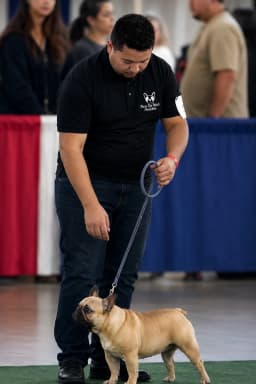
I have been on both sides of the conversation. I have been the breeder refreshing my inbox waiting for a serious inquiry. And I have been the buyer with six tabs open, quietly deciding which breeder to message and which ones to close.
Most breeders think the sale starts when someone sends that first message. It does not. The sale starts ten minutes before that, when a stranger is Googling your kennel name, scanning your page, and making snap judgments about whether you are worth their time.
Who this is for: breeders who get traffic or social interest but suspect buyers are silently dropping off before they ever reach out.
Here is what that process actually looks like.
The Google
Before a buyer messages you, they search for you. They type your kennel name, your program name, maybe your name with the breed next to it. What comes up matters more than you think.
If the first result is a Facebook page with a blurry cover photo and no posts from the last four months, that buyer is already forming an opinion. If the first result is a clean website with photos, available animals, and a clear way to get in touch, you are starting ahead.
This is not about vanity. Buyers use Google results the same way you use them when you are deciding whether to trust a business. A breeder with a real website signals permanence. A breeder with only a Facebook page signals "this might be a hobby that disappears next year."
I am not guessing. I have watched my own inquiry rate change based on nothing but whether my site showed up first or my Facebook page did.
First Impression of the Site
When a buyer lands on your page, you have about five seconds. They are not reading your mission statement. They are scanning.
Here is what they notice immediately: Does this look professional or thrown together? Are the photos good? Can I tell what breed this person works with? Is there a way to contact them without digging?
A cluttered page with autoplay music, fifteen banner images, and a wall of text about your journey into breeding will lose people. Not because your story does not matter. It does. But the buyer is not there for your story yet. They are there to figure out if you are serious. Your story earns attention after trust is established, not before.
Clean layout. Strong photos above the fold. Breed name and location visible immediately. That is the baseline.
Health Testing Visibility
This is the single biggest trust signal for educated buyers. And the pool of educated buyers is growing every year.
If a buyer has to message you to ask whether your animals are health tested, you have already lost a percentage of your audience. The ones who do not ask are not necessarily the ones you want. The best buyers, the ones who will care for your animals and refer others to your program, want to see health testing front and center.
That means results on the site. Not just "all our animals are health tested" in a paragraph somewhere. Actual results. Linked, embedded, or at minimum clearly stated per animal. OFA numbers. Genetic panel results. Vet clearances. Whatever applies to your breed.
I keep health records visible on every animal I list. Not because buyers demand it every time, but because the ones who check and see it there never need to ask. They already trust me before the first message.
Pedigree Transparency
Serious buyers care about lineage. If your animals have registered pedigrees, show them. If you are working toward registration, say that clearly. If your program is unregistered, be honest about why.
What kills trust is vagueness. "Champion bloodlines" with no specifics. A sire's name dropped with no registration number, no photo, no link. Buyers who know the breed will notice. Buyers who are new will not know what to look for, and that vagueness will make them uneasy without understanding why.
Pedigree transparency also protects you. When a buyer can verify lineage before reaching out, the conversations you have are better. You spend less time proving yourself and more time qualifying the buyer.
Photo Quality
You do not need a professional photographer. You need a phone with a decent camera, natural light, and a clean background.
What buyers are looking for in photos: Can I actually see the animal? Is the environment clean? Are there multiple angles? Is this photo recent or has it been recycled from three years ago?
What drives buyers away: dark indoor photos with flash glare, cluttered backgrounds, heavy filters, screenshots of screenshots, and photos where the animal is a small shape in the corner of a messy room.
I have lost count of the breeders I know who produce incredible animals but present them like an afterthought. The animal deserves better. And your program deserves the inquiries that good presentation brings.
One more thing. Buyers compare. They will have your photos and a competitor's photos open side by side. You do not need to win a photography contest. You just need to clear the bar of "this person cares about how they present their work."
Pricing Clarity
This is where breeders split into two camps. Some list prices. Some do not. Both approaches work, but both come with tradeoffs.
If you list prices, buyers can self-select. The ones who cannot afford your animals will not waste your time or theirs. The ones who can will know what to expect. This saves you dozens of conversations that were never going to close.
If you do not list prices, you need to make the contact process easy and fast. "Inquire for pricing" works if a buyer can actually get a response within 24 hours. It does not work if they fill out a form and hear nothing for a week. They will buy from someone else. Not because your animals are not worth waiting for, but because another breeder made it easier.
What never works is being evasive. "Price depends on quality" with no range. "DM for info" with a 72-hour response time. Buyers interpret that as either disorganized or overpriced and hoping nobody compares.
Pick an approach and execute it well. Either is fine. Ambiguity is not.
Contact Accessibility
The buyer has made it through your photos, your health testing, your pedigree information, and your pricing. They are ready to reach out. Now what?
If the only way to contact you is a Facebook message, you are banking on the buyer having Facebook, being comfortable messaging a stranger there, and trusting that you will actually see it in your filtered requests folder. That is a lot of ifs.
A contact form on your website, a visible email address, or even a simple "text or call" with a phone number removes friction. The easier you make it to start the conversation, the more conversations you start.
I have talked to breeders who complain about low inquiry volume while their only contact method is buried three clicks deep on a Facebook page. The animals are not the problem. The path to the animals is.
The Decision Happens Before the Message
Everything above happens in silence. The buyer does not tell you they Googled your kennel name and found a dead Wix site. They do not tell you they noticed your competitor had OFA results on every listing and you had none. They do not tell you they tried to find your prices, gave up, and messaged someone else instead.
They just move on. And you never know the inquiry existed.
The breeders who consistently sell out their litters and have waitlists are not always producing better animals than you. Some of them are just easier to find, easier to trust, and easier to reach.
That is not luck. It is presentation. And it is fixable.
So Here Is the Question
If a buyer landed on your site right now, would they message you or keep scrolling?
If you are not sure, or if the honest answer makes you uncomfortable, that is the gap. Not in your animals. Not in your program. In how you present it to the people who are already looking for exactly what you produce.
Built By Dusty helps breeders build websites that earn trust before the first message. If your online presence is not working as hard as your program, let's fix that.
See what a breeder website looks like →
Or, if you already know the site is the weak point, tell me about your breeding program and I’ll tell you what to fix first.