Animal Breeder Website That Actually Works
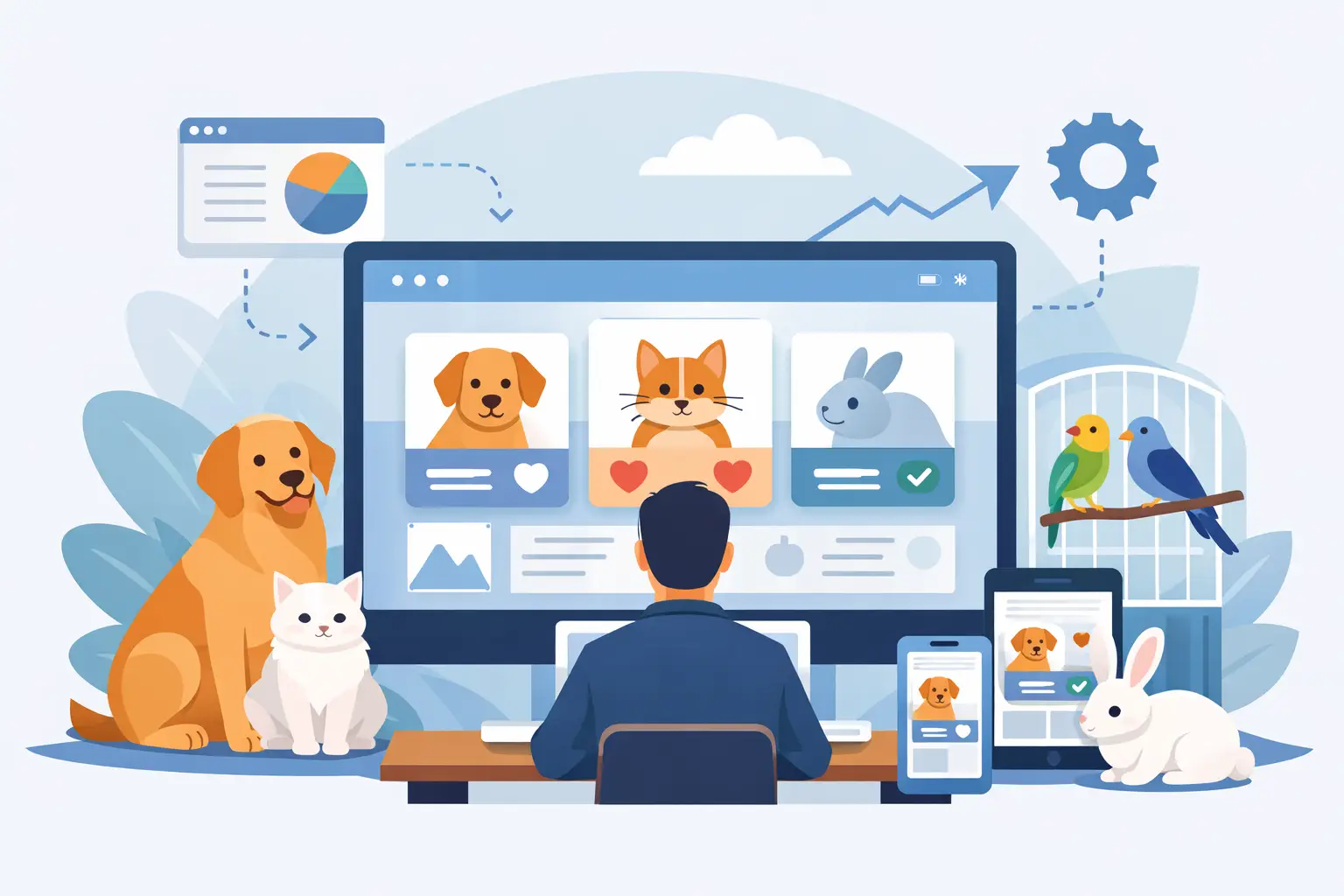
Most breeder websites fail in the same place - not on the homepage, but the moment a real buyer tries to take the next step. They click around, find outdated litter info, fill out a weak contact form, and then the whole process drops into email chaos. A good animal breeder website is not just a brochure. It is part sales tool, part screening system, part trust builder, and part operations layer for your breeding program.
That matters whether you breed dogs, reptiles, or another species with a serious buyer process. The public side of your site has one job: help the right people understand your program and move forward with confidence. The private side has a different job: keep you from managing inquiries, deposits, records, and follow-ups across six disconnected tools.
What an animal breeder website is really supposed to do
Breeders usually come into this conversation thinking they need a better design. Sometimes they do. But design is rarely the core problem.
More often, the real issue is that the website was built like a generic small business site. It has an About page, a gallery, maybe a contact form, and a few scattered updates. That setup does nothing for the actual work of breeding. It does not qualify buyers. It does not connect puppy or animal availability to inquiries. It does not support waitlists, deposits, litter announcements, pairings, pedigrees, or records. It leaves you doing the real work manually.
A breeder website should reduce friction on both sides. Buyers should know what is available, how your process works, what standards you breed to, and how to contact you the right way. You should be able to collect structured inquiries, track interest by litter or animal, manage next steps, and avoid repeating the same information all day.
That is the difference between a pretty website and a functional one. One gives you a web presence. The other supports your operation.
Why generic website builders usually break down
The problem with most off-the-shelf website platforms is not that they are bad. It is that they are generic by design.
They assume your business sells a straightforward product or service. Breeding programs do not work like that. Availability changes. Buyers need education and screening. Deposits may depend on timing, approval, sex, color, pairing, or breed-specific factors. Some breeders have waitlists. Some work by application first. Some place animals based on fit, not first-click payment. None of that maps cleanly to a standard template.
So breeders patch together a system. The website lives in one place. Forms live somewhere else. Deposits are handled through another tool. Records sit in spreadsheets. Buyer updates happen in email or text messages. Pedigrees and animal data are managed separately, if they are managed at all.
You can make that work for a while. Plenty of breeders do. But as inquiry volume grows, or as your standards get more structured, the patchwork starts costing you time and trust. Buyers get inconsistent information. You lose track of who asked about which pairing. Deposit status becomes a manual check. Records get duplicated. Team members, family members, or kennel staff all work from different notes.
This is usually the point where breeders say their website feels outdated. What they often mean is that their workflow is fragmented.
The pages and features that matter most
An effective animal breeder website does need strong branding and clean presentation. But after that, function matters more than flair.
Your available animals or planned litters section needs to be easy to update and clear to buyers. If someone cannot tell whether a litter is planned, open, reserved, or closed, you are creating unnecessary back-and-forth. Your inquiry flow should gather the information you actually use to screen buyers, not just name, email, and a blank message box.
Process pages matter too. Good buyers are often willing to follow your steps if those steps are clearly explained. If you require an application before a deposit, say that. If you place based on temperament or program fit, explain it. If your timelines vary, set that expectation early.
Trust pages carry more weight in breeder businesses than in a lot of other industries. Health testing, titles, lineage, husbandry standards, socialization approach, club membership, and program values are not filler content. They are part of the sale. The right buyer is looking for that depth, and the wrong buyer may screen themselves out when they realize you run a serious program.
For some breeders, pedigrees, animal profiles, and historical production also belong on the site. For others, that information is better kept behind a more controlled buyer or member workflow. It depends on species, market, and how public you want your records to be.
Need help with your breeder website or software?
I build websites, records apps, and breeder tools for programs like yours. Tell me what you need and I'll help figure out the right next step.
A breeder website should protect your time
This is the part many web designers miss. Breeders do not just need more leads. They need better lead handling.
If your site creates a flood of low-quality inquiries, it is not helping. If it sends every question straight to your inbox with no structure, it is not helping. If it lets buyers assume animals are first-come, first-served when your placement process is more selective, it is actively making your life harder.
A good system protects your time by setting boundaries in the workflow itself. That can mean application forms with the right screening questions. It can mean inquiry routing tied to a specific litter, pairing, or available animal. It can mean automated confirmations that explain next steps. It can also mean deposit systems that only open when a buyer is approved, instead of inviting random commitments from the public.
There is always a balance here. Too much friction and you may lose qualified buyers. Too little and you spend your week answering messages from people who never read a word on your site. The right setup depends on your volume, your placement standards, and how hands-on your process needs to be.
The back end matters as much as the homepage
A polished front end can make a breeder look established. A connected back end is what keeps that reputation intact.
When inquiry data, animal records, deposits, and communication history are disconnected, mistakes happen. Buyers get updates late. Internal notes are incomplete. Deposit status is unclear. Staff or family members give conflicting answers. If you run multiple litters, multiple species, or any kind of registry or breeder network, those gaps multiply fast.
This is where custom or breeder-specific systems start making sense. Not every breeder needs a fully custom platform on day one. But many outgrow generic tools long before they realize it. Once your website needs to talk to your inquiry pipeline, your buyer communication flow, and your animal data, the site stops being a simple marketing asset. It becomes operational infrastructure.
That is a very different build than a standard small business website.
When a custom animal breeder website makes sense
Not every breeder needs custom development. If you are early, have low inquiry volume, and only need a cleaner public presence, a focused website refresh may be enough.
But custom starts to make sense when your program has real process complexity. Maybe you manage waitlists across multiple planned pairings. Maybe you need deposits tied to approval stages. Maybe your records are scattered across kennel software, spreadsheets, and notebooks. Maybe buyers need visibility into pedigrees, statuses, or contract steps. Maybe you run a breed club, registry, or breeder network with member-facing functionality.
At that point, forcing your business into generic tools usually costs more than building around the way you already work.
This is where breeder-native development matters. A developer who has never handled litter reservations, buyer screening, pedigree structures, or breeding records will spend a lot of time learning your world. A breeder-focused studio starts with the business logic already understood. That shortens the path from vague frustration to a system that actually fits. Built By Dusty sits in that lane for a reason.
What to look for before you hire anyone
If you are shopping for an animal breeder website, ask better questions than, can they make it look nice?
Ask how availability will be managed. Ask how inquiries are captured and organized. Ask what happens after a buyer submits a form. Ask whether deposits can be handled according to your approval process instead of a generic checkout flow. Ask how animal data, pedigrees, records, and updates will be maintained over time.
Also ask who is responsible for content structure. Many breeders have strong programs and weak websites simply because nobody helped them translate what buyers need to see. Good website work in this niche is not just coding. It is knowing which information builds trust, which details belong in the process, and which repetitive buyer questions should be answered by the system before they ever hit your phone.
The right site should make you feel more organized, not more dependent on workarounds.
A breeder website does not need to be flashy. It needs to reflect how your program actually runs, give buyers confidence, and stop creating admin mess behind the scenes. If your current site looks fine but still leaves you buried in inbox threads, duplicate records, and deposit confusion, the problem is probably not the color palette. It is that your website was never built to do breeder work in the first place.
The Breeder Newsletter
Get articles like this in your inbox. No spam, no fluff, just breeder business.
No spam. Unsubscribe anytime.