Is a Custom Breeder App Worth It?
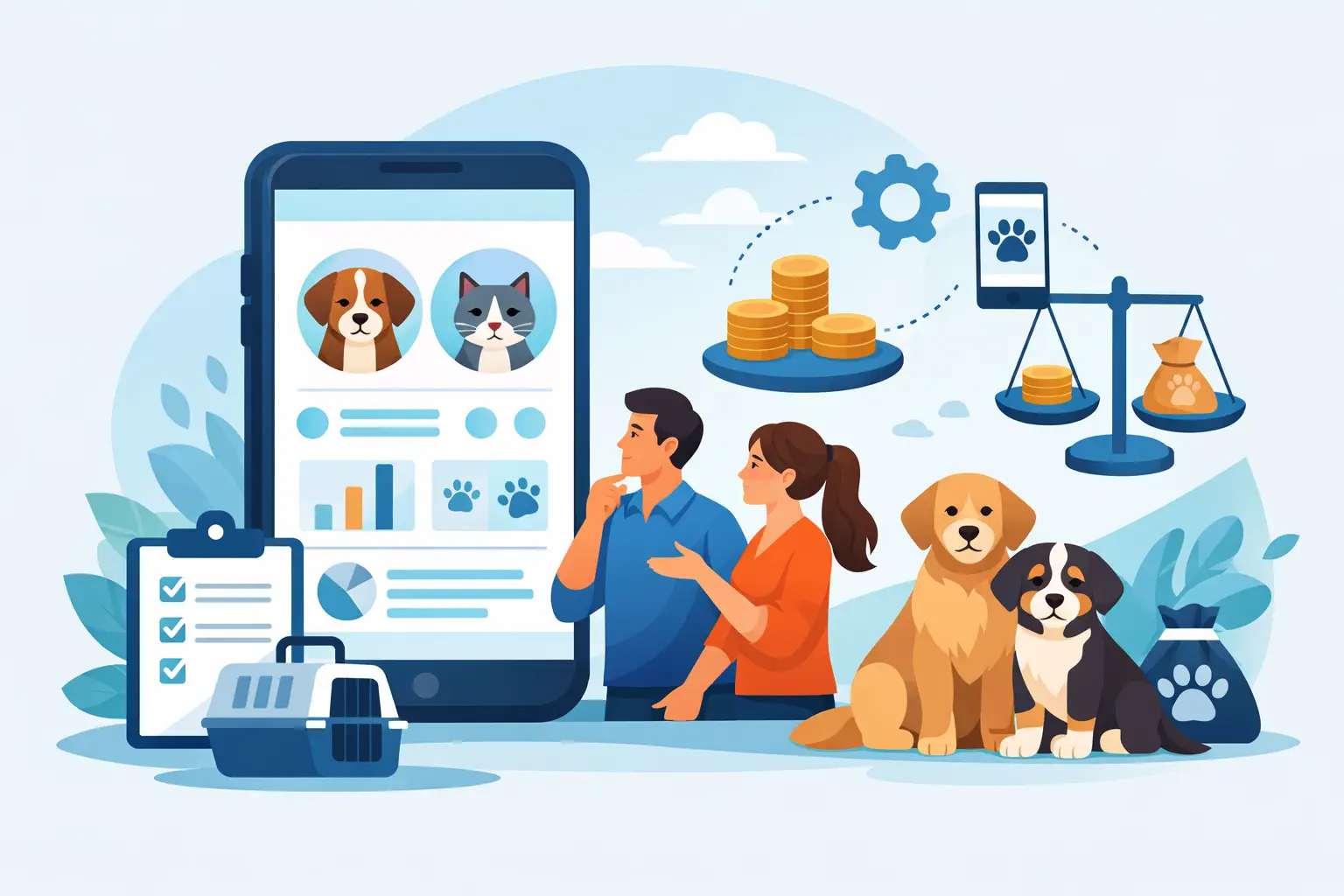
If you're still running your program through a website form, text messages, PayPal notes, a spreadsheet, and whatever you can remember from last week, you do not have a system. You have a pile of workarounds. A custom breeder app fixes that by building your actual breeding workflow into one place instead of forcing your program to fit generic software.
For serious breeders, that difference shows up fast. Fewer missed inquiries. Cleaner deposit handling. Better puppy or animal matching. Records that stay attached to the right animal, litter, and buyer. Less time answering the same questions over and over. More trust from buyers who can tell your operation is organized.
The real question is not whether custom software sounds nice. The question is whether your current setup is costing you enough time, money, and control that a custom breeder app starts making practical sense.
What a custom breeder app actually means
A lot of breeders hear the word app and picture something bloated, expensive, or unnecessary. Sometimes it is. But in practice, a custom breeder app usually means software built around the way your program already works, or the way it should work once the mess is cleaned up.
That could be a buyer-facing system that handles inquiries, applications, approvals, deposits, and updates. It could be an internal operations system for animal records, pedigrees, heat cycles, pairings, litter tracking, health data, contracts, and pickup scheduling. For some programs, it is both, connected together so nothing has to be entered twice.
That last part matters. Most breeder businesses do not struggle because they lack tools. They struggle because they have too many disconnected tools. One form for inquiries, another tool for email, another for deposits, another for records, and a website that barely reflects what is actually available. Generic software makes you become the integration layer. That gets old fast.
When a custom breeder app makes sense
Not every breeder needs custom software right away. If you have a small program, one or two litters a year, and your current process is clean, you may be fine with simpler tools for now. Custom becomes more valuable when complexity starts stacking up.
That usually happens when your inquiry volume is high, your buyers are joining waitlists before litters are born, your records are too important to leave scattered across files, or your program has enough moving parts that mistakes are becoming expensive. It also makes sense when your public website and your back-end operations are telling two different stories.
For dog breeders, that often shows up around screening and placement. You are not just selling a product. You are evaluating homes, tracking preferences, managing litter order, and communicating over a timeline that can stretch for months. For reptile breeders, the pressure may show up more in animal inventory, genetics, hatch tracking, and status updates. For clubs and registries, the challenge is often member submissions, lineage records, approvals, and database integrity.
Different operations, same issue. The software needs to understand breeder logic, not just general business logic.
The biggest problems a custom breeder app solves
The first is inquiry chaos. Most breeders do not need more leads. They need a better way to sort serious buyers from casual ones, track where each person stands, and keep the right communication attached to the right animal or litter. When that process lives in inbox threads and manual notes, things get missed.
The second is deposit confusion. Deposits sound simple until you are juggling reservation order, contract status, transfers between litters, refunds, payment reminders, and buyers who change their mind after you held a spot. A custom setup can enforce your actual rules instead of asking you to improvise around someone else's payment flow.
The third is animal data fragmentation. Health records, color or trait notes, pedigrees, breeding history, registration details, and litter outcomes all matter. If that information lives in different places, you lose speed and confidence. Worse, your team starts relying on memory, and memory is not a system.
The fourth is weak buyer experience. Buyers may not know the work happening behind the scenes, but they absolutely notice disorganization. Slow responses, confusing steps, duplicate forms, unclear updates, and inconsistent information chip away at trust. A stronger process feels more professional because it is more professional.
Need help with your breeder website or software?
I build websites, records apps, and breeder tools for programs like yours. Tell me what you need and I'll help figure out the right next step.
Why generic tools usually break down
Generic CRM tools, website builders, and form apps can help for a while. The problem is not that they are bad software. The problem is that they were not built for breeding operations.
They do not understand planned litters versus live litters. They do not understand matching buyers to animals based on sex, color, structure, temperament goals, or breeding rights. They do not understand pedigree relationships, registration workflows, or the difference between a casual inquiry and a buyer who has already been screened and approved.
So breeders end up bending generic tools into shape. They create tags, hacks, naming systems, manual reminders, and side spreadsheets just to keep things moving. That works until volume increases or someone on the team misses a step.
This is where breeder-native software wins. It starts with the real workflow instead of asking you to translate your business into software language that was built for dentists, real estate agents, or ecommerce stores.
What to include in a custom breeder app
The right feature set depends on your program, but most useful systems are built around a few core jobs.
On the front end, a custom breeder app should make it easier for the right buyers to move forward. That can include inquiry forms that ask breeder-relevant questions, automated follow-up, approval steps, deposit collection, status tracking, and updates tied to a specific litter or animal.
On the operations side, it should centralize records that your program uses constantly. Animal profiles, lineage, health testing, breeding history, litter data, contracts, payments, communication logs, and document storage are common starting points. If you run a larger program, role-based access for staff or family members may matter too.
The best systems also connect your website to your operations. If an animal is reserved, sold, retained, or available, that status should not need to be updated in three separate places. If a buyer is approved for a future litter, that should be visible where your team is already working. Good custom software cuts duplicate entry and reduces opportunities for human error.
The trade-offs are real
Custom does not mean instant, cheap, or automatically better. If your process is a mess, software will expose that mess before it solves it. You still need clear policies on deposits, communication, screening, and recordkeeping. A developer cannot invent operational discipline for you.
Cost is another obvious factor. A custom breeder app is an investment, not a template purchase. For some breeders, the right first move is not a full app. It may be cleaning up the website, fixing inquiry intake, or connecting deposits and buyer communication before building deeper records software.
There is also the question of timing. If your program is still changing every month, you may need a phased approach. Start with the most painful workflow, then expand once the foundation is stable. That is usually smarter than trying to build every possible feature on day one.
How to decide if you're ready for a custom breeder app
Start with friction, not features. Where are you losing time every week? Where are buyers getting confused? Where are mistakes happening? Which tasks depend too heavily on your memory? If you disappeared for three days, what would grind to a halt?
Those questions tell you more than a feature wishlist ever will. If the same operational pain keeps showing up around inquiries, deposits, records, or litter management, that is where custom software earns its keep.
It also helps to look at how often you are re-entering the same information. Repetition is usually a sign that your systems are disconnected. And disconnected systems are where breeder businesses start leaking time, accuracy, and buyer confidence.
A shop like Built By Dusty approaches this differently than a general software firm because there is no need to explain what a waitlist is, why pedigree structure matters, or how reservation order can affect communication and placement. That matters more than most breeders realize. The wrong developer can build exactly what you asked for and still miss what your operation actually needs.
A custom breeder app is worth it when your program has outgrown workarounds and generic software is starting to create more labor than it removes. At that point, better tech is not about looking modern. It is about getting your time back, protecting your records, and running a breeding program that feels as solid behind the scenes as it looks from the outside.
If your current setup only works because you are constantly holding it together, that is probably your answer.
The Breeder Newsletter
Get articles like this in your inbox. No spam, no fluff, just breeder business.
No spam. Unsubscribe anytime.