Puppy Inquiry Management Software That Fits
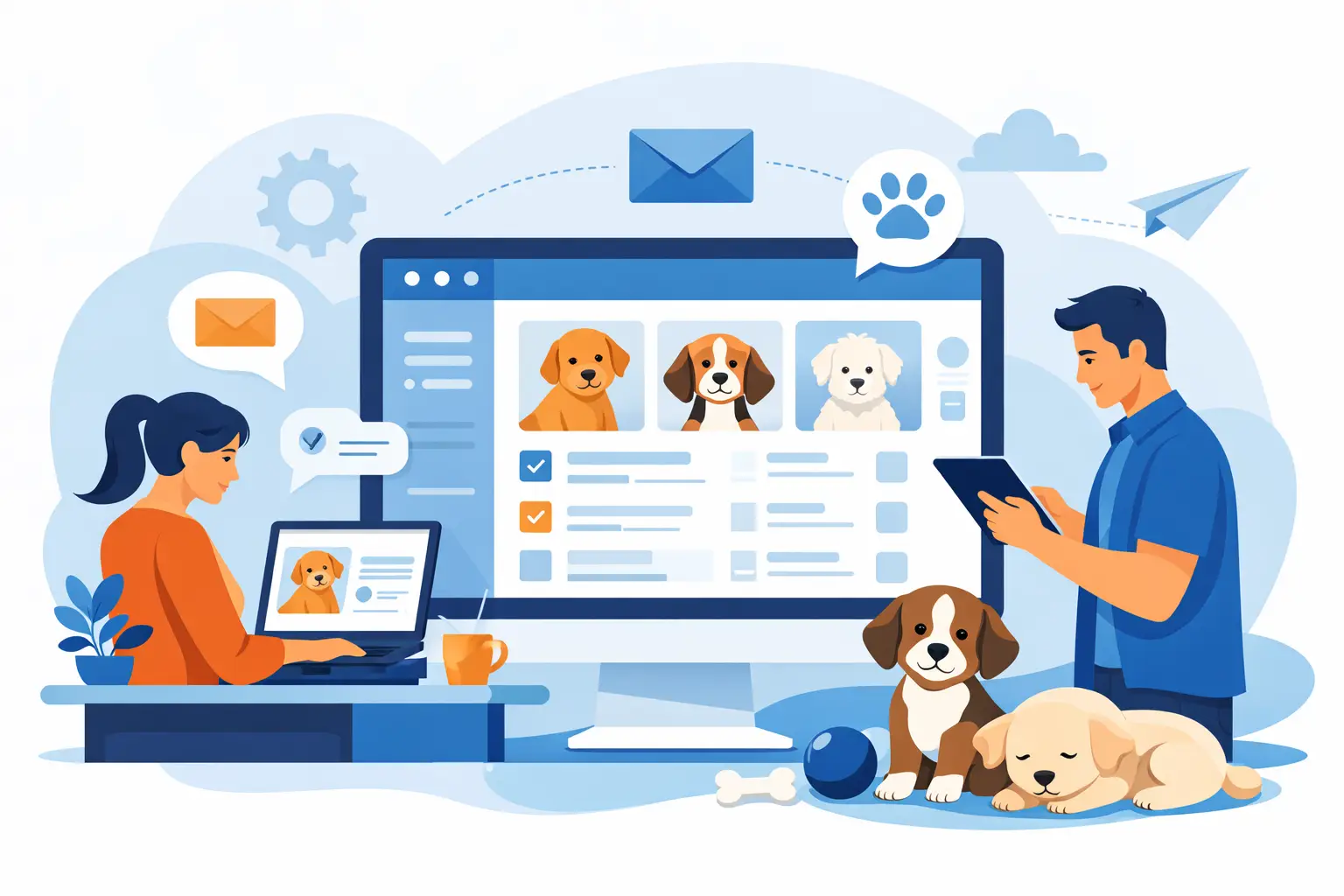
If you have ever answered the same puppy question 27 times in one week, lost track of who was approved for a future litter, or tried to match a family from old text messages and half-finished email threads, you already know the problem. Puppy inquiry management software exists because breeder communication is not simple lead tracking. It is screening, education, timing, trust, and recordkeeping all at once.
Most software in this category fails for one reason: it was not built around how breeders actually work. A generic CRM sees a "lead." A breeder sees a home application, a repeat buyer, a family on a breed-specific timeline, a pending deposit, a preference list, and maybe a dozen deal-breaking red flags. Those are not the same thing.
What puppy inquiry management software should actually do
At a basic level, the software should collect inquiries and keep them organized. That is the bare minimum, not the win. The real value is in what happens after the first message comes in.
Good puppy inquiry management software should help you qualify buyers, not just respond faster. It should route inquiries from your website into one place, store answers to screening questions, show where each person stands in your process, and make it easy to follow up without digging through your inbox. If you are still bouncing between website forms, Gmail, Facebook messages, paper notes, and a spreadsheet called "real waitlist final v3," your system is costing you time and probably sales.
For dog breeders, timing matters as much as organization. Some people are ready now. Some are six months out. Some want a male from a specific pairing. Some are great homes but not for the puppy currently available. Your software needs to reflect that reality. It should track status, preferences, household details, prior conversations, and where the buyer sits in your actual placement process.
Why generic CRMs usually break down for breeders
This is where a lot of breeders get stuck. On paper, a general sales CRM sounds close enough. In practice, it usually creates more work.
Most CRMs are built for sales teams moving prospects through a standard pipeline. That pipeline assumes the product is fixed and the goal is to close the deal quickly. Puppy sales do not work like that. The puppy itself changes. The litter changes. Availability changes. Buyer fit matters. Sometimes the right outcome is delaying placement, redirecting a home to a future litter, or declining the inquiry altogether.
A breeder also needs more context than a typical sales tool wants to store. Housing setup, prior breed experience, children in the home, activity level, sex preference, color preference if relevant, breeding rights, pet versus show placement, referral source, and whether someone has completed your screening properly all affect next steps. Generic software can hold that information, but usually in awkward custom fields layered on top of a system that still thinks you are selling gym memberships or roofing quotes.
Then there is the trust issue. Buyers are not just comparing puppies. They are evaluating your professionalism. If your communication is slow, inconsistent, or obviously disorganized, that weakens confidence fast. Serious breeders know this already. A good system is not just internal admin. It is part of the buyer experience.
The real operational benefits of breeder-specific systems
The best systems reduce decision fatigue. Instead of wondering where an inquiry came from, whether someone already filled out the application, or who was next on the list for a female, you can see it.
That sounds small until litter season gets busy. Then it becomes the difference between running a program and reacting to one.
A breeder-specific inquiry system should give you one clear workflow from inquiry to screening to deposit to placement. It should support the way breeders separate casual interest from serious applicants. It should also let you maintain a clean record of conversations over time, because many buyers come back later, refer friends, or return for another dog. Losing that history means losing context you already worked hard to build.
There is also a practical financial side to this. Missed follow-ups cost placements. Messy deposit handling creates confusion. Unclear waitlist management creates frustration and can damage your reputation. Software that keeps communication, deposits, and buyer status connected is not a luxury once your volume grows past what your memory can reliably manage.
Features worth caring about in puppy inquiry management software
Not every breeder needs a giant custom platform on day one. But there are a few capabilities that matter more than flashy dashboards.
Need help with your breeder website or software?
I build websites, records apps, and breeder tools for programs like yours. Tell me what you need and I'll help figure out the right next step.
First, your intake process needs to be structured. A contact form alone is not enough. You want inquiry capture that asks the right screening questions upfront and sends that information into a system where it can be sorted and reviewed.
Second, status tracking needs to match breeder reality. New inquiry, follow-up sent, application reviewed, approved, not a fit, waitlist, deposit paid, matched, and placed are useful statuses because they reflect actual decisions. If the software forces you into vague sales stages, you will end up working around it.
Third, communication history should live with the buyer record. Every email, note, and follow-up matters when a family circles back months later. You should not have to reconstruct the relationship from multiple inboxes.
Fourth, the software should connect to deposits and availability. This is where many systems fall apart. Buyer communication and financial commitment are tied together in breeding operations. If someone is approved and submits a deposit for a future litter, that should not live in a separate universe from the inquiry record.
Finally, reporting matters if you are trying to improve your process. Which sources bring serious buyers? Where do people drop off? How long do inquiries sit before first response? You do not need enterprise analytics. You do need enough visibility to spot bottlenecks.
When off-the-shelf tools are enough, and when they are not
It depends on your program size and complexity.
If you produce a small number of litters each year, have a straightforward screening process, and mostly need a cleaner way to organize inquiries, a lighter system may be enough for now. The goal at that stage is consistency. Get inquiries into one pipeline, standardize your follow-ups, and stop relying on memory.
If you are managing multiple litters, maintaining an active waitlist, taking deposits for future breedings, or coordinating records across your website and internal operations, basic tools start to show their limits fast. That is usually the point where custom or breeder-native systems make more sense. The problem is no longer just lead capture. It is workflow design.
This is also where niche experience matters. A developer who understands breeding operations does not need a long explanation of why waitlist order, litter planning, registration details, and buyer screening all affect one another. That context shortens the build process and leads to better systems. Built By Dusty operates in that exact lane, which is why the solutions tend to fit breeder work instead of forcing breeders to adapt to generic software logic.
How to evaluate puppy inquiry management software without wasting money
Do not start by asking which tool has the most features. Start by asking where your current process breaks.
If your biggest issue is missed follow-up, focus on communication tracking. If your issue is poor applicant quality, focus on intake and screening. If your issue is waitlist confusion, look hard at status design and deposit integration. Software is only useful when it solves the right operational problem.
Ask whether the system mirrors your actual placement workflow. Can it handle future litters? Can it separate approved homes from casual inquiries? Can it track preferences that matter for placement decisions? Can you see buyer history quickly when someone reappears months later? Those questions tell you more than a feature grid ever will.
Also pay attention to setup burden. Some systems technically can be customized to fit breeders, but only after a painful amount of DIY configuration. That is not always a bad trade-off if you are highly organized and have simple needs. But many breeders are better served by software built with their use case in mind from the start.
The best software is the one your program will actually use
A lot of inquiry systems fail not because they are weak, but because they are annoying. If entering notes feels tedious, if statuses are confusing, or if the process adds friction during a busy week, people stop using it. Then the operation drifts back to email searches, text threads, and scattered notes.
The right system should make your process clearer, not heavier. It should help you respond professionally, screen consistently, and carry buyer information forward from first inquiry to final placement. That is the standard.
Breeders do not need more software for the sake of software. They need fewer gaps between inquiry, screening, deposit, and decision-making. When puppy inquiry management software is built around that reality, it stops being another tool to manage and starts acting like part of the program itself.
If your inbox feels like a kennel run with the gates open, that is probably your sign. The fix is not more hustle. It is a system that understands breeding work well enough to hold it together.
The Breeder Newsletter
Get articles like this in your inbox. No spam, no fluff, just breeder business.
No spam. Unsubscribe anytime.