Bundle & save
Want every keeper's emergency template? Get the full kit.
The Keeper's Emergency Kit includes this document and 22 more for $37. Lifetime updates included.
Document · Keeper's Emergency
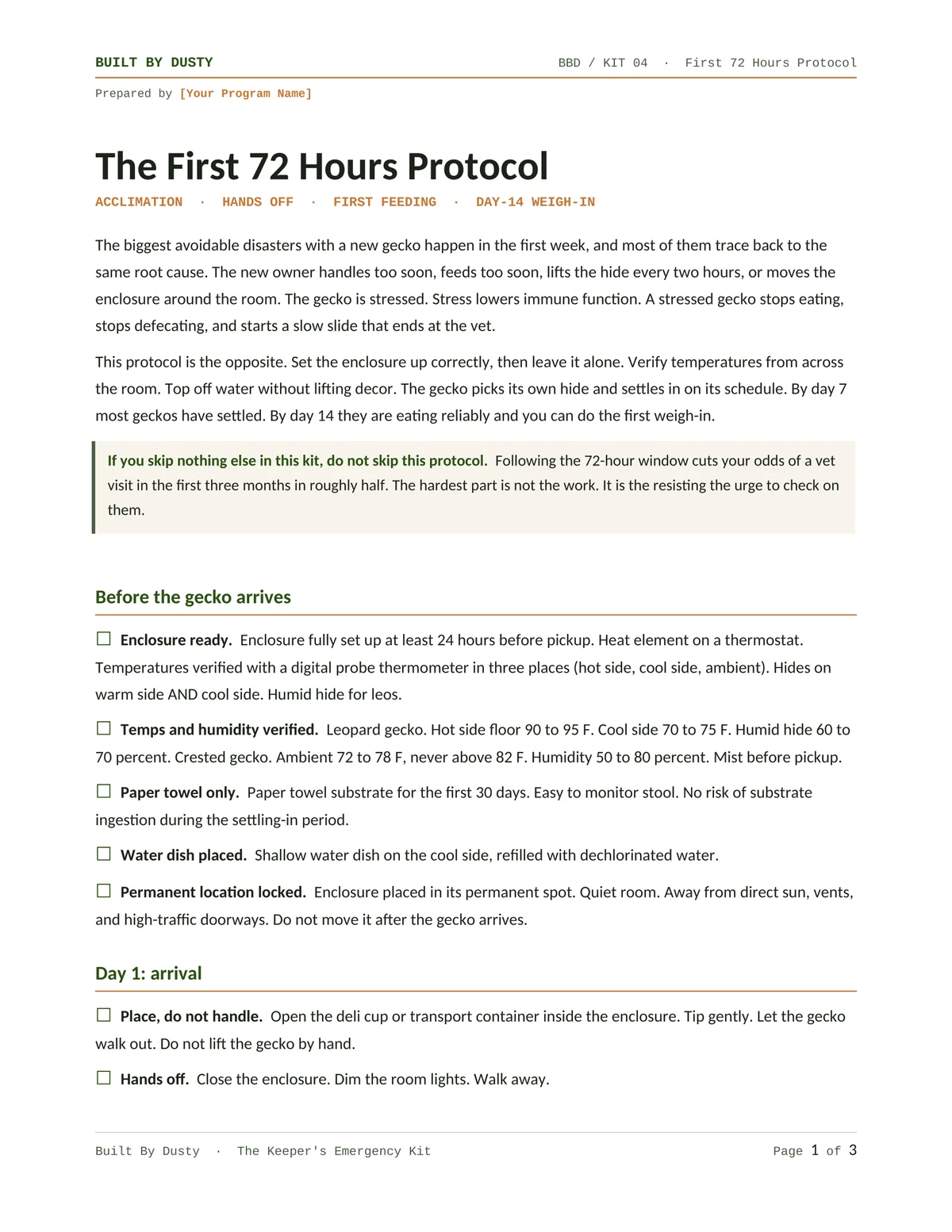
Prevent the most preventable disaster window. Day-by-day from arrival through day-14 weigh-in, with the hands-off rules that protect new acclimating geckos from stress-induced anorexia.
About this document
The most preventable disasters in gecko keeping happen in the first week of ownership. The new owner handles too soon, feeds too soon, lifts the hide every two hours to check on the gecko, or moves the enclosure around the room. The gecko is stressed. Stress lowers immune function. A stressed gecko stops eating, stops defecating, and starts a slow slide that ends at the vet.
The First 72 Hours Protocol is the opposite. Set the enclosure up correctly, then leave it alone. Verify temperatures from across the room. Top off water without lifting decor. The gecko picks its own hide and settles in on its schedule. By day 7 most geckos have settled. By day 14 they are eating reliably and the first weigh-in establishes baseline.
What the document does:
It walks day-by-day through arrival (day 1), settling (day 2), first feeding attempt (day 3), normal feeding cadence (days 4 to 7), and the transition to week 2 with first short handling and the day-14 baseline weigh-in. Every section is checkbox-driven.
What is included:
Format and how it works:
Word version (.docx) for editing and a PDF version for printing. The print version lives in the go-home folder and most new owners check off the daily items as they complete them. The protocol is sized to make the first two weeks feel structured rather than improvised.
Why this version is different:
Most care sheets focus on enclosure setup and ongoing husbandry. The First 72 Hours Protocol focuses on the high-risk acclimation window where most preventable problems begin. Following the protocol cuts the odds of a vet visit in the first three months by roughly half, by removing the stress-induced anorexia that drives most early crises.
Who this is for:
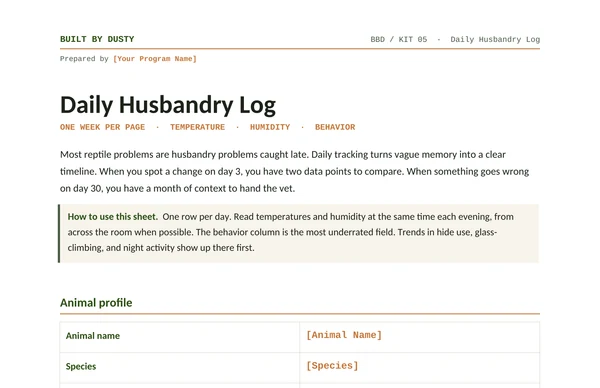
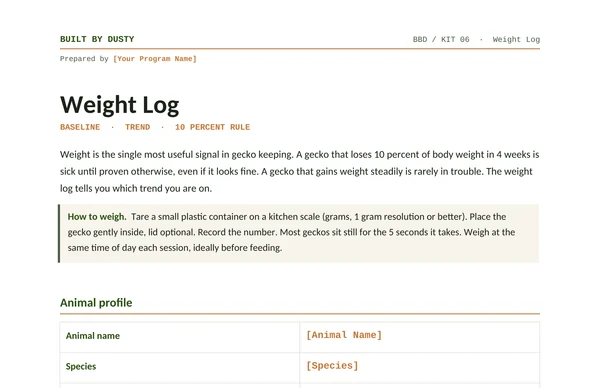
For gecko buyers receiving a new animal home for the first time and for breeders who want every buyer to follow the same proven acclimation window. Pairs with the Daily Husbandry Log (which starts in earnest on day 4) and the Weight Log (which records the day-14 baseline weight).
Get the protocol on its own, or open the bundle for the full kit at volume pricing.
What you get
Editable in DOCX + PDF, with lifetime updates when laws or registries change.
Bundle & save
The Keeper's Emergency Kit includes this document and 22 more for $37. Lifetime updates included.
Updates
You bought version 1. When a state adds a registry requirement, a new federal rule lands, or a working breeder catches something that belongs in the document, the new file shows up in your inbox. No upsell, no annual subscription, no "unlock by upgrading." The document is yours, updates included, forever.
Common questions
The contracts were drafted with an attorney and pressure-tested across multiple working programs, but they are templates — not a substitute for a lawyer for your specific state's laws. Each file ships with a clear note about that. Most breeders use them as a starting point and have a local attorney review for state-specific edits.
DOCX + PDF. The DOCX opens in Word, Google Docs, Pages, or LibreOffice. The PDF is fill-on-screen or print-and-fill. Everything is editable.
When I ship a new version of this document, the new file lands in your inbox. Laws shift. A state adds a registry requirement. A working breeder tells me something that belongs in the document. The next version goes out to everyone who bought the previous one. No upsell, no annual subscription.
14-day no-questions-asked refund. If the documentdoesn't fit your operation, you get your money back and I'd genuinely like to hear why so the next version is better.
Yes, by a wide margin if you need more than two or three documents. The Keeper's Emergency Kit bundles this and every other keeper's emergency document for $37.
Also useful