Working gecko breeders building a go-home kit
The kit ships as a single zip with your program name on every page. Drop it in your go-home folder and your buyers receive the same quality of guidance every time.
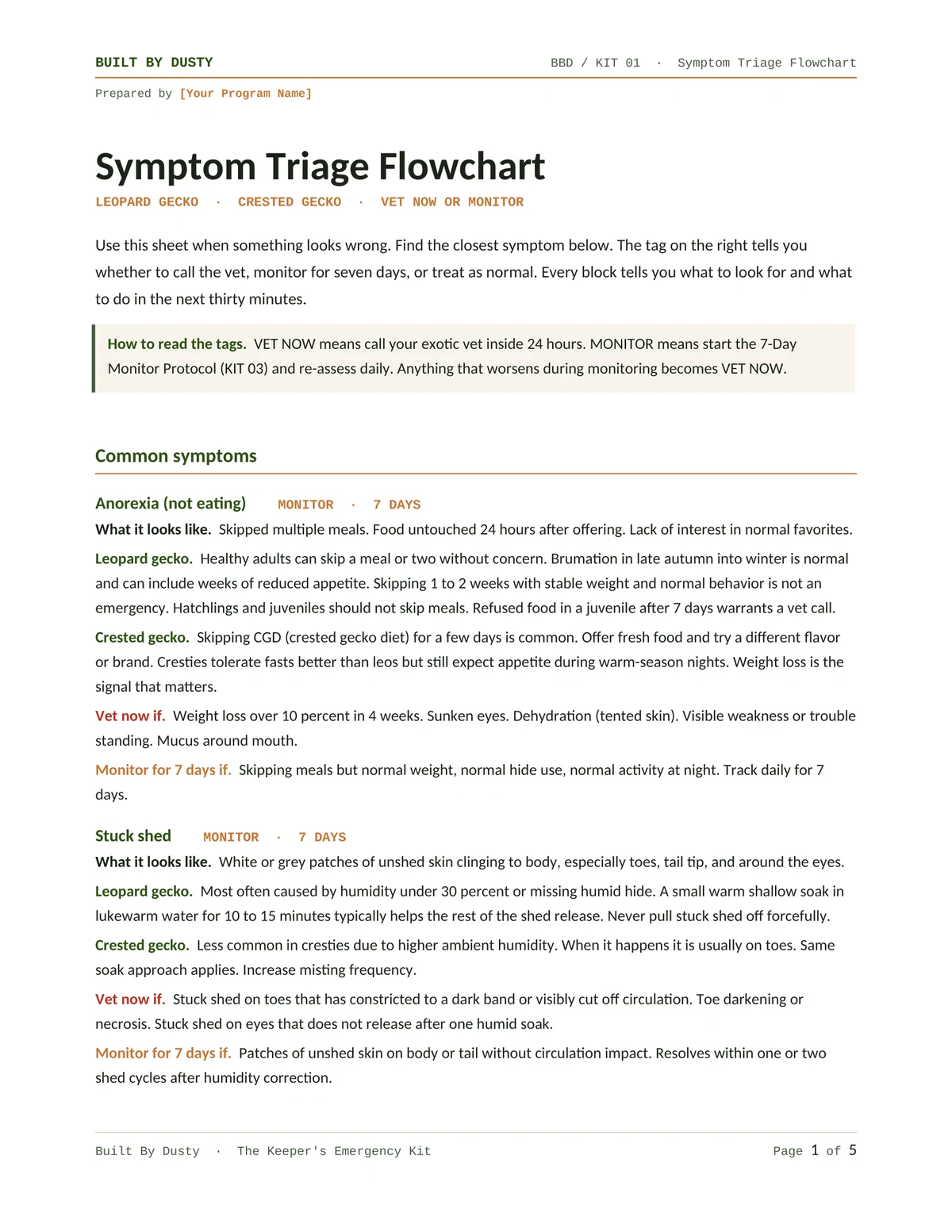
Kit · 05
Triage flowcharts, husbandry baseline logs, crisis playbooks, vet communication, and failsafes for gecko keepers. Built so the documents that matter at 2am are already in the buyer's hand.
Bought one at a time, the 23 documents cost $68.77. The kit is $37.
An emergency is the wrong moment to start reading. The triage steps only help if they are printed and sitting by the enclosures before anything goes wrong, not bookmarked for later.
001 / What is inside
23 documents covering triage, husbandry baseline logs, crisis playbooks, vet communication, and environment failsafes. Organized as the system your new owner reads once and references for years.
Every gecko that leaves your program goes home with someone who might email you at midnight. Stuck shed on the toes. Eight days of refused food. A power outage in February. The first time the toes look wrong on Sunday morning. The Keeper's Emergency Kit is the kit you send home so your new owners stop emailing you at 2am and start fixing the problem themselves.
The kit is buyer-facing. Your program name lives in the header of every page.
It is the last good thing in your go-home folder and it is the document that reduces the number of 2am emails your phone receives, because the answers are already in the buyer's hand. 23 documents plus a six-tab husbandry workbook, built around the decisions that actually come up in keeping geckos.
A 5-page symptom triage reference covering 12 common gecko symptoms with VET NOW versus 7-day-monitor decisions for each, leopard gecko and crested gecko notes per symptom.
A 3-page checklist for the first 30 minutes after a gecko symptom escalates to VET NOW. Photo prep, call script, stabilization by crisis type, transport.
A 2-page structured monitoring protocol for gecko symptoms that do not yet warrant a vet visit. 7-day tracking grid, escalation criteria, day-7 decision.
A 3-page protocol for the first 72 hours after a new gecko arrives home. Day-by-day acclimation, hands-off rules, first feeding attempt, day-14 weigh-in.
A weekly husbandry log for tracking temperature, humidity, eating, defecation, and behavior. One row per day, one page per week, with species-specific target ranges.
A 2-page weight log for tracking gecko weight, change since last weigh-in, and percent change. Target weight ranges by life stage for leopard and crested gecko.
A 2-page feeding log for tracking food offered, quantity consumed, supplements, and refusal patterns. Species-specific feeding reference for leopard and crested gecko.
A 2-page shed log for tracking shed frequency, completeness, and problem zones. Species-specific expected frequencies plus stuck-zone protocols.
A 6-tab spreadsheet covering animal profile, daily husbandry, weight, feeding, and shed tracking. Live formulas for percent weight change and days since last shed.
A 3-page playbook for gecko anorexia. Distinguishes behavioral skipping from medical anorexia using weight as the signal. Five common causes, vet escalation triggers.
A 3-page playbook for gecko impaction. Warm soak protocol, substrate change as the actual fix, vet escalation criteria, prevention.
A 3-page playbook on metabolic bone disease in geckos. Early reversible signs, late permanent damage, husbandry audit for calcium, D3, UVB, and diet quality.
A 3-page playbook for gecko respiratory infection. Always vet, early and late signs, husbandry root causes, post-treatment recovery tracking.
A 3-page playbook for stuck shed in geckos. Warm humid soak protocol, four problem zones by urgency, husbandry audit to prevent the next one.
A 3-page emergency protocol for gecko prolapse. Four prolapse types, first 30 minutes, keep tissue moist with sterile saline, never push back.
A 3-page playbook for gecko power outages. Species-specific temperature tolerance windows, hand warmer protocol, summer heat-wave inversion, evacuation criteria.
A 3-page playbook for finding an escaped gecko. Seal the room first, where leos and cresties actually go, hide trap construction, flour trail trick.
A 3-page worksheet for finding and screening an exotic vet before the first crisis. ARAV directory pointer, phone-screening questions, fillable vet network worksheet.
A 3-page worksheet completed before an exotic vet appointment. Captures animal info, symptoms, husbandry, feeding, history, and recent changes the vet will ask about.
A 3-page recovery log for the 14 days after an exotic vet visit. Captures diagnosis, medications, husbandry corrections, and daily tracking with a 0 to 5 symptom severity scale.
A 1-page tape-to-the-rack quick reference for gecko power outages. Decision thresholds, cold and hot protocols, hard rules, evacuation criteria.
A 3-page quarantine protocol for new gecko arrivals and sick separation. Enclosure setup, hygiene, 30 to 90 day duration, what to monitor, end-of-quarantine criteria.
A 2-page fillable emergency contact directory. Primary and backup exotic vet, after-hours clinic, breeder, backup keeper, utilities, poison control.
The orientation pieces and compiled reference that make the kit land cleanly with a buyer and read end to end if they want it.
002 / Who it is for
The kit assumes you are keeping or breeding leopard or crested geckos, sending animals to retail homes, and want every buyer to leave with a real reference instead of a Facebook group recommendation. If that matches you, every document lands. If not, the FAQ below covers the edge cases.
The kit ships as a single zip with your program name on every page. Drop it in your go-home folder and your buyers receive the same quality of guidance every time.
The crisis playbooks, husbandry logs, and tape-to-the-rack failsafes work for your own collection too. Triage frameworks and vet-prep worksheets do not care whether you bred the animal or bought it.
If your husbandry advice currently lives in your head and your text-message history, the kit is the structured handoff that makes the next buyer call easier than the last one.
003 / Frequently asked questions
The six questions that come up most often. If yours is not here, and ask directly.
The kit is written primarily for leopard geckos and crested geckos, with both species called out where parameters diverge (temperatures, humidity ranges, expected shed frequency, brumation behavior). The structure works for other gecko species and most small reptiles, but specific temperature and feeding guidance assumes leos or cresties unless you adapt the numbers for your species.
No. The kit is informational, not veterinary advice. Every crisis playbook includes explicit vet escalation criteria, and the Vet Now Checklist is built to make the trip to the vet faster and more accurate, not to replace it. The kit's job is to help a keeper triage what they are looking at, capture the data the vet will ask for, and avoid the panic decisions that come from acting without a framework.
Yes. Every page has a [Your Program Name] header field at the top. Click once and type. Your program name appears on every page of every document the buyer reads, so the kit looks like a deliberate part of your go-home folder instead of a downloaded template. The Welcome and About the Author orientation docs ship inside the bundle so the framing matches.
Generic care guides are written once and answer the easy questions. This kit is built around the questions that come up at 2am: when is anorexia behavioral versus medical, when does a stuck shed need a vet versus a soak, what do you actually do during a 36-hour power outage in February. Each playbook covers what you are looking at, immediate action, what not to do, and clear vet-escalation triggers.
Fourteen-day, no-questions-asked refund. Email dmumphrey@builtbydusty.com and you get your money back. No refunds after the fourteenth day, since the documents are digital and have been delivered.
The email address you check out with is the address future updates land in. When the kit changes (a new playbook, a husbandry parameter update, a customer-suggested improvement), you get the new version. No subscription, no upsell.
004 / Related kits
Three other kits cover the back office, the show ring, and the contracts for working dog programs. Bundle pricing applies if you grab more than one in the same order.
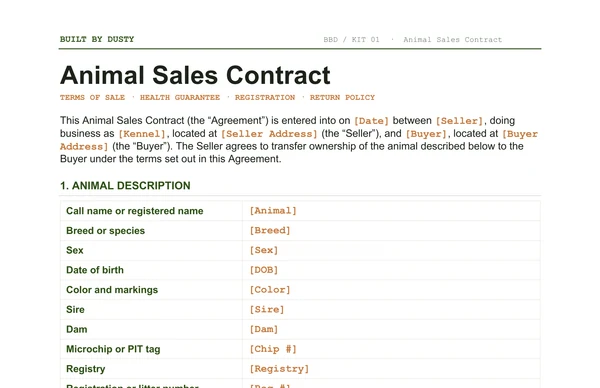
Nine breeder contracts with editable Word files and field-note annotations. Sale, deposit, stud service, live arrival, and more.
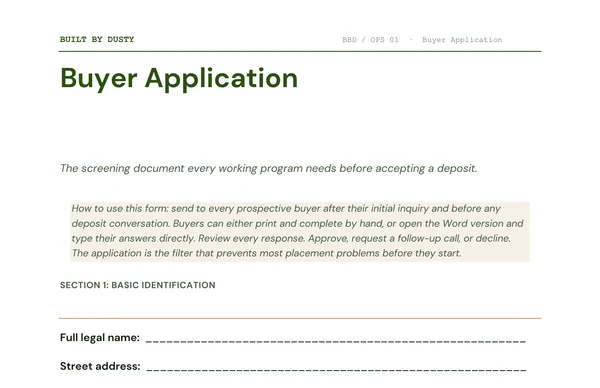
The full back office in a folder. Twelve operational templates plus buyer pipeline forms and litter tracking.
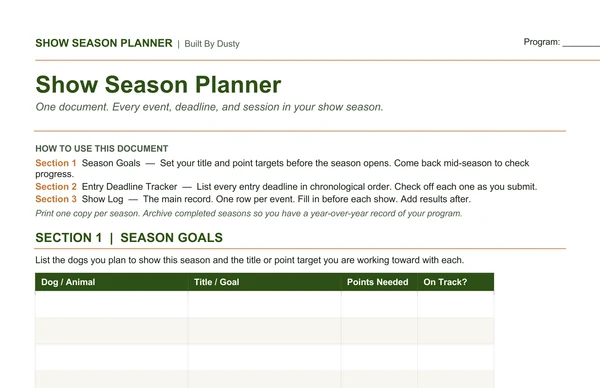
The travel-ready system for the conformation and trial circuit. Eight templates from season planner to championship log.
Buying piece by piece
Every document in the kit is also sold standalone. Pick up the Symptom Triage Flowchart or one crisis playbook to confirm the format works for your program before committing to the bundle.
Browse individual docsPast the emergency
The kit gets you through the crisis. Breed Ledger tracks the day-to-day: clutches, lineage, weights, and where each animal went. Built for reptile keepers as much as dog breeders, live in production, free to start.
See Breed LedgerPast templates
The Keeper's Emergency Kit is written for leos and cresties. If you need the same structure adapted for a different species or a custom protocol set, the workflow diagnostic is $199 and ends with a written report whether you hire afterward or not.
See custom work