Color guide · Coat length (L locus)
Fluffy French Bulldog: genetics, AKC status, and a color calculator
A fluffy French Bulldog is a Frenchie with a long coat instead of the breed's standard short, smooth one. It is the most-searched of all Frenchie coat terms, and almost every question about it comes down to one recessive gene. Here is what a fluffy is, how the genetics work, whether it is AKC registrable, and how to predict a pairing before you plan it.
What is a fluffy French Bulldog?
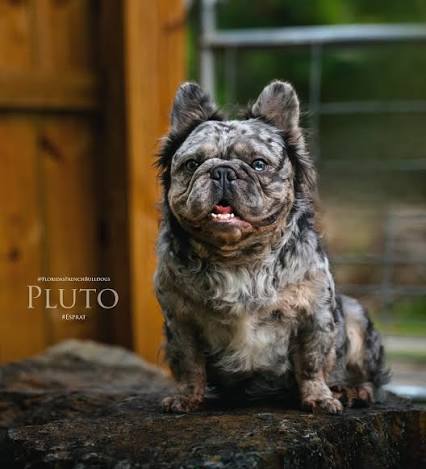
A fluffy Frenchie looks like a standard French Bulldog with longer, softer fur, most noticeably on the ears, chest, legs, and around the face. Everything else, the build, the bat ears, the temperament, is standard Frenchie. The only difference is coat length, and it comes from a single recessive gene.
"Fluffy" is a breeder-community term. The same long-coat gene shows up across many breeds under names like "long hair" or "coat" testing, but in French Bulldogs the long coat is non-standard, which is exactly why it draws so much attention.
The genetics: the L locus and the L4 variant
Coat length in dogs is controlled by the FGF5 gene, often called the L locus. The dominant, wild-type allele (L) produces the short coat the French Bulldog standard calls for. A recessive long-hair allele produces the fluffy coat, but only when a dog inherits two copies.
Several long-hair variants exist across breeds; the one in French Bulldogs is L4 (the c.559-560dupGG mutation in FGF5). A dog's status at this locus is one of three things:
- Clear (L/L): short coat, carries no fluffy. Cannot produce a fluffy no matter the mate.
- Carrier (L/l): short coat, looks completely standard, but carries one copy and can pass it on.
- Fluffy (l/l): long coat. Has two copies and passes a fluffy allele to every puppy.
Can two carriers produce a fluffy?
Yes, and this is the part that surprises new breeders. Because carriers look identical to clear dogs, two standard-coated Frenchies can produce a fluffy puppy if both parents happen to be carriers. Cross two carriers (L/l x L/l) and the average litter is one quarter clear, one half carriers, and one quarter fluffy, so roughly 1 in 4 puppies is fluffy.
The only way to know before you breed is a coat-length DNA test on both parents. Once you know each dog's status, the odds are exact. Load two fluffy carriers in the color calculator and you will see the 25 percent fluffy result, plus the carrier odds for every visually short-coated pup.
Are fluffy French Bulldogs AKC registered?
This is where most of the confusion (and the arguing) lives. Registration and show eligibility are two different things:
- Registration: a fluffy with two French Bulldog parents is a purebred and can be registered with the AKC. It is a French Bulldog.
- The show ring: the AKC French Bulldog standard requires a short, smooth coat, so a long coat is a disqualification in conformation. A fluffy cannot earn a conformation championship.
So "is it AKC?" has two honest answers: yes, it can be registered as a purebred; no, it cannot be shown in the breed ring. A disqualification is a show classification, not a health verdict and not a statement that the dog is any less a French Bulldog.
Health of fluffy French Bulldogs
The long coat itself is cosmetic. The L4 allele changes hair length, not health, so a fluffy is neither healthier nor less healthy than a standard Frenchie because of its coat. Fluffies carry the same breed-wide considerations every French Bulldog owner should know about (airway, spine, and joint health), and responsible breeders test and select for those regardless of coat.
One practical note: a longer coat needs a little more grooming, and because fluffies are marketed at a premium, it is worth confirming a dog's L/l status and its parents' health testing rather than paying a "rare color" markup on looks alone.
Price and demand
Fluffies command a premium because they are visually uncommon: both parents have to carry the allele and the puppy has to inherit two copies. High demand plus real scarcity pushes prices well above a standard-coat Frenchie. None of that changes the genetics, though. A fluffy is a recessive coat that surfaced, not a separate or rarer breed, and the way to buy one confidently is a DNA panel, not a price tag.
Predict your exact pairing
Stop managing genetics on scratch paper. If you know your parents' coat-length status, load them into the engine below to generate exact litter odds, visual phenotype breakdowns, and the full AKC standard-versus-disqualification split instantly.
Fluffy French Bulldog: common questions
Yes. Fluffy is recessive, so a short-coated dog that carries one copy of the long-hair allele (L/l) looks completely standard. Breed two carriers and, on average, 1 in 4 puppies (25 percent) inherits two copies and is fluffy. That is why fluffies appear in litters from two normal-looking parents, and why DNA testing before a pairing is the only way to know. Once you have your panel results, plug them into the free color calculator to see your litter's exact genetic blueprint in a single tap.
A fluffy with two French Bulldog parents is a purebred and can be AKC registered. What it cannot do is compete in AKC conformation: the standard calls for a short, smooth coat, so a long coat is a disqualification in the show ring. Registration and show eligibility are two different things, and that distinction is the heart of the fluffy debate.
Yes. The long-hair allele (the L4 variant of the FGF5 gene) occurs naturally within the French Bulldog gene pool. A fluffy from two Frenchie parents is 100 percent French Bulldog, a normal recessive coat variant, not a crossbreed.
You cannot tell by looking, because carriers have a normal short coat. A coat-length DNA test reports each dog as clear (L/L), a carrier (L/l), or fluffy (l/l). Test both parents before breeding and you know exactly what a pairing can produce.
They are visually rare (both parents must carry the allele and the pup must inherit two copies) and demand is high, so fluffies command a premium over standard coats. Price does not change the genetics, though: a fluffy is not a separate or rarer breed, just a recessive coat that surfaced.