I have read more breeder contracts than I care to count. The ones from a quick Google search. The ones a friend swore by. The ones a breeder downloaded from a Facebook group in 2018 and never updated. Most of them are missing at least three of the eight clauses below.
This post is the short version of what I learned watching breeders get burned. Deposits that vanished into chargebacks. Custody fights over a co-owned female. A buyer who returned a puppy two years later and demanded a full refund because the contract did not say what happened after week 12. None of those situations were inevitable. They were paperwork problems first and emotional problems second.
If you are searching for a breeder contract template, you probably already know you need one. What you need is the right version. The 8 sections below are what I include in every contract I write for my own program, and they are the same 8 sections that anchor the editable kit I sell.
Need the editable version now? The Breeder Contract Kit includes all 8 sections below as fully editable .docx files, plus 7 other breeder-specific contracts. Get the Breeder Contract Kit, $59.
001 / Buyer identification and screening confirmation
Most templates open with a sentence like "Buyer agrees to purchase one puppy." That is the floor. It is not enough.
The opening section should name the buyer, their address, and a phone number that is theirs (not a partner's, not a parent's). It should reference the application they filled out. If you have a screening process, the contract is the place to confirm that the buyer answered honestly. A line that says "Buyer represents that all answers on the buyer application dated _____ are true and complete to the best of their knowledge" makes a future dispute much shorter.
This is also the section where you confirm the buyer is purchasing as an individual, not as an agent for a kennel or a pet store. If you do not want your puppies resold, this is the line that gives you something to act on when one shows up on a sale page three weeks later.
If you do not have a buyer application yet, I wrote about what to ask before you accept a deposit. Start there, then come back.
002 / The animal in detail
The contract should describe the specific animal with enough precision that no one can argue it was a different puppy or a different gecko later.
For dogs, that means breed, registered name once available, color, markings, sex, date of birth, microchip number, and either the AKC registration number or a note that it is pending. Photo attachments help. I include two: one from the day of pickup and one from the day the litter was registered.
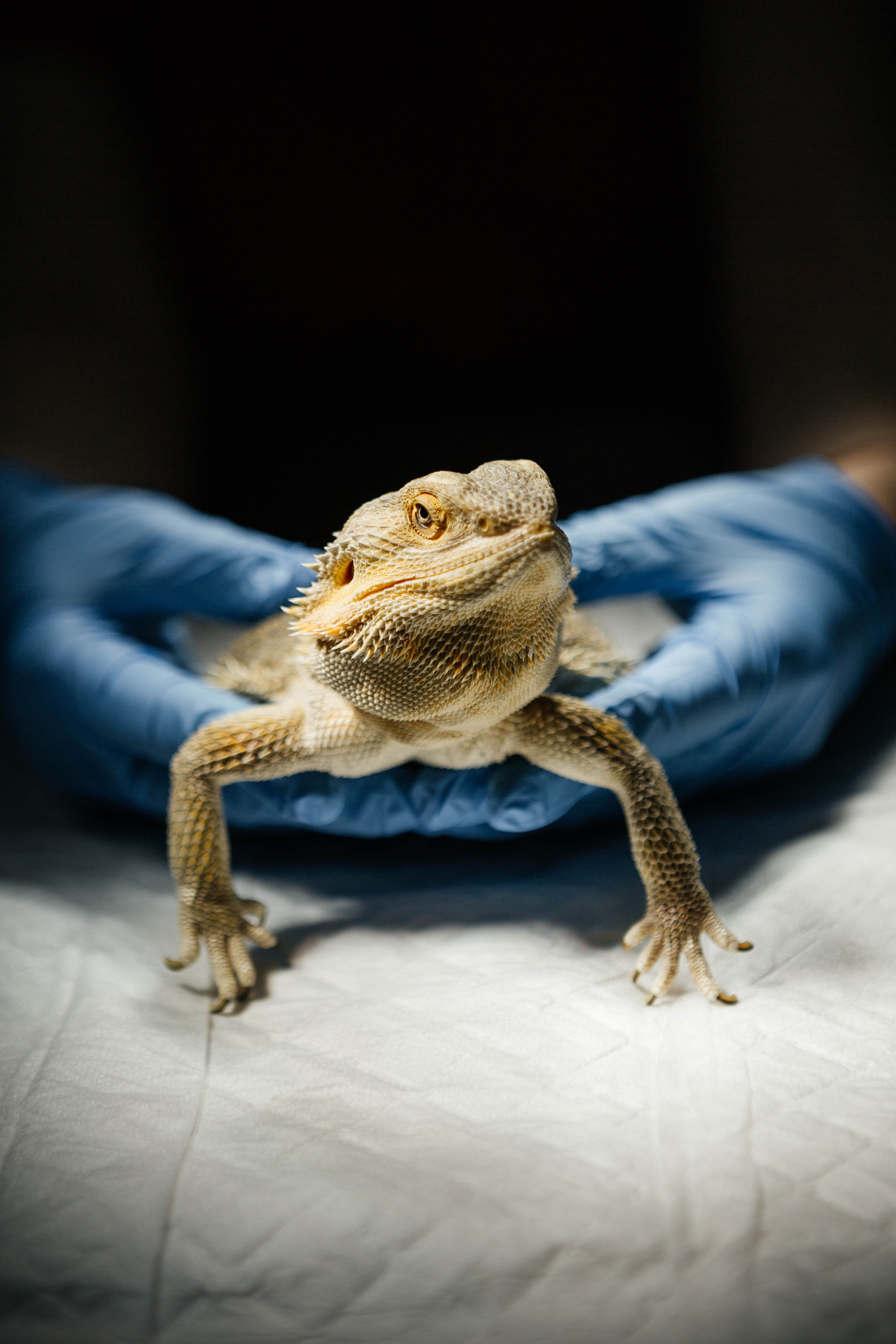
For reptiles, it means species, locality if applicable, morph combination spelled out, hatch date, weight at sale, sex (or "unsexed at sale" with the date a sexing attempt was made), and any het status with a note on whether it is visual, proven, or assumed. The morph and het language is what reptile-specific contracts need that dog contracts do not. I cover that separately in the reptile breeder contract template post.
If you skip this section, you have a contract that could apply to any animal you ever sold. That is a problem the first time someone challenges which puppy was returned.
003 / Payment terms and deposit handling
This is the section that gets the most disputes and the least attention. A breeder contract template that says "Buyer agrees to pay $2,500 due at pickup" is missing four things.
What every payment section needs:
- The total price, broken into deposit and balance.
- Whether the deposit is refundable, and under what conditions. "Non-refundable except in the event the breeder cancels the litter" is the cleanest version. Some states will not enforce a non-refundable deposit if it is silent on conditions, so spell it out.
- The form of payment accepted for the balance. If you do not take personal checks, say so. If Zelle is fine but Venmo is not, say so. The day-of-pickup is not the time to argue this.
- A statement on chargebacks. I include a clause that says any chargeback initiated more than 30 days after delivery will be contested and the buyer will be responsible for any associated fees.
If you want the long version on this section, the puppy deposit agreement post has the language I use.
004 / Health guarantee specifics
This is the section where vague language hurts the most.
A good health guarantee names the conditions covered (typically genetic conditions that present within the first two years), the proof required (a written diagnosis from a licensed veterinarian, not a social media post), and the remedy (replacement puppy from a future litter, partial refund, or full refund with return of the animal, in that order of preference for most breeders).
A weak health guarantee says "Puppy is guaranteed to be healthy at time of sale." That is unenforceable, and worse, it sets a buyer expectation you cannot meet. No animal is ever guaranteed to be healthy forever. The contract is where you set the actual boundary.
For dogs, I also include language that ties the guarantee to the buyer following the recommended vaccine schedule, keeping the dog at a healthy weight, and bringing the dog to a vet within a set window after pickup (3 to 5 business days is standard). A buyer who skipped the post-pickup vet visit and is now claiming a congenital defect has a much weaker case if the contract makes that visit a condition of the guarantee.
For shipped animals specifically, the live arrival guarantee post covers what to add for transit-specific risks.
005 / Return and rehoming clause
Every breeder contract should include a right of first refusal. If the buyer can no longer keep the animal, they contact you first. Not a rescue, not Craigslist, not a friend of a friend.
The clause has three parts. First, the buyer agrees to contact you in writing if they intend to rehome. Second, you have a defined window (I use 14 days) to take the animal back or arrange an approved placement. Third, the buyer agrees not to surrender the animal to a shelter, a rescue, or a third party without your written consent.
This clause does two things. It protects the dog or reptile by keeping them out of rescue. It also protects your program by preventing one of your animals from being resold under a different breeder's name.
If you want to extend this further into guardian home territory, the guardian home agreement post covers the version of this language that survives the first conflict.
006 / Spay/neuter or breeding rights
The contract has to pick a lane. The animal is being sold with full breeding rights, with limited rights, or with a spay/neuter requirement. There is no "we'll figure it out later."
For pet placements, the standard clause requires spay or neuter by a certain age (I use 14 months for most breeds, later for giant breeds), with proof submitted to the breeder, and the AKC limited registration held until proof is received.
For full breeding rights, the contract names the price difference, confirms the buyer's understanding that the animal can be bred, and references any health testing the buyer agrees to complete before any breeding. This is also where you protect your line: a clause that requires the buyer to disclose the breeder name on any registered offspring is not unusual.
The breeding rights contract post goes deeper on the full rights side. If a buyer wants to negotiate from "limited" to "full," that post is the conversation.
007 / Co-ownership terms (if any)
If the animal is being placed on a co-ownership, this section is the entire reason the contract exists. Skip it and you do not have a co-ownership. You have a verbal agreement waiting to fall apart.
A co-ownership clause should cover:
- Who has physical custody, and the address where the animal lives day to day.
- Who pays for what (food, vet, training, show entries, breeding costs).
- Decision authority for breeding, training, and medical (named in advance, not "we will both agree" which is how every co-own dispute starts).
- Exit terms. What happens if one party wants out? Who has buyout rights, at what price, and on what timeline?
If any of this is unclear, the contract is unclear, and the relationship will be unclear the first time you disagree about anything. The co-ownership agreement post walks through the version I use, including the exit terms most templates skip.
008 / Dispute resolution and jurisdiction
The last section is the one most templates either skip or copy from a generic legal form. Here is what matters.
Name the state whose laws govern the contract. If you are in Texas, the contract is governed by Texas law. If a buyer in California sues you in California, your contract still pulls the dispute back to Texas under the choice-of-law clause. That is worth real money in legal fees.
Name the venue. "Any dispute will be resolved in the state or federal courts of Smith County, Texas." This means a buyer who wants to fight you has to come to your home county. Most buyers will not.
Include a mediation requirement before litigation. A clause that says "the parties agree to attempt mediation through a mutually agreed mediator before initiating any legal action" filters out most disputes, because most disputes are emotional and a mediator can solve them in two hours for $300.
Include a fee-shifting clause if your state allows it. "The prevailing party in any dispute is entitled to recover reasonable attorney's fees and costs." This is the single biggest deterrent to a frivolous lawsuit.
003 / DIY vs free template vs the kit
| Option | What you get | Time investment | What it costs |
|---|---|---|---|
| Write it yourself | A contract that fits your program exactly | 8 to 20 hours, plus legal review | $0 to $500 (review) |
| Free template online | A starting point that is usually missing 3 of the 8 sections above | 2 to 4 hours of edits | $0, plus the cost of what it misses |
| Breeder Contract Kit | 8 editable .docx contracts covering every situation in this post | 30 minutes to customize | $59 |
The trade-off is clear. If you have 20 hours and want the practice of writing it from scratch, do that. If you do not, the kit is the version of "free template" that does not skip the clauses that cost you money later.
The Breeder Contract Kit includes: Sales contract (pet and breeding versions), deposit agreement, co-ownership agreement, guardian home agreement, stud service agreement, breeding rights addendum, and live arrival guarantee. All editable .docx. $59. Get the kit.
004 / What to do next
If you are starting from nothing, write the buyer identification and animal description sections yourself, then drop in the kit's templates for the rest. That gives you a contract that is yours, in your voice, with the legal sections that hold up.
If you already have a contract, run it against the 8 sections in this post. Check each one. If a section is missing or vague, the kit's version is editable and you can paste in what you need.
If you are still on a handshake, stop reading and write something today. A bad contract is better than no contract. A good contract is better than a bad one. The kit gets you the good version in an hour.
Get the Breeder Contract Kit, $59.
Dusty Mumphrey runs an East Texas breeding program and built Breed Ledger because nothing on the market did what his own program needed. He writes field notes on contracts, software, and the part of breeding that happens at the kitchen table.